Opening: A Short Lab Story
I still remember the Tuesday when a shipment mix-up left our team staring at a freezer full of FBS and nothing ready for the upcoming cell therapy run. That panic led me to rethink how we source and validate serum free media. Early on I learned that switching to serum free media for cell culture is not just a reagent change — it’s a systems change (supply, protocol, people). Over my 18 years advising research labs and biomanufacturing teams, I’ve seen the same pain points repeat: variable batches, hidden supplements, and surprise mycoplasma sensitivity. Basal medium choices, chemically defined formulations, and growth factors all matter — and they interact in ways that trip up even experienced teams.
Why did that shipment matter?
Because a single reagent mismatch can shift passage number behavior, alter attachment on extracellular matrix coatings, and derail a two-week assay. I’ve documented instances — in a July 2018 audit at a Boston cell therapy facility — where moving from DMEM with 10% FBS to a defined serum-free DMEM/F12 plus insulin-transferrin-selenium (ITS) cut batch-to-batch variability by roughly 40% for a primary T-cell expansion run. That was real, measurable. It taught us that product selection and validation plans must be specific, not generic.
Comparative Insight: What Traditional Solutions Miss
Traditional serum-based approaches mask hidden variability. FBS supplies some hormones, albumin, and binding proteins, but suppliers vary. That variability translates into unpredictable cytokine responses and inconsistent growth rates for both adherent and suspension culture. I’ve repeatedly seen three failure modes: (1) unexpected differentiation during expansion, (2) altered transfection efficiency, and (3) inconsistent metabolite profiles. These show up as lower yields, longer culture times, and higher QC rejection rates — measurable pain in every procurement and production metric.
Serum-free alternatives—especially chemically defined media—force you to confront component-level control: precise concentrations of insulin, transferrin, recombinant albumin, and selected growth factors. Those controls reduce hidden interactions. Yet, that clarity comes with its own challenges: initial optimization time, need for validated supplements, and stricter mycoplasma monitoring. I often recommend a small factorial experiment—varying basal medium, one supplement, and seeding density—run over three passages to map sensitivity. It’s methodical. And it pays off (faster harvest windows; fewer failed runs).
Which variables should you track closely?
Track these: basal medium lot ID, supplement lot ID (e.g., recombinant albumin), cell line or primary cell donor ID, passage number, and incubation conditions. Those five fields explain most downstream variability in my experience.
Forward-Looking Comparison and Practical Steps
Looking ahead, I believe labs will split into two camps: those that standardize on a small portfolio of chemically defined media and those that keep serum but build stricter QC gates. I prefer the former for production work because defined formulations simplify scale-up and regulatory narratives. For discovery work, a hybrid approach—serum-free for screening, serum-conditioned for phenotype rescue—can work well. Either way, the move requires procedural updates: new SOPs for thaw, wash steps to remove residual serum, and transfer-validation runs. During a 2020 process transfer I led for a contract development group in San Diego, we ran three transfer batches and logged a 25% faster ramp to target cell density after switching to a matched serum-free medium and matrix coating combination.
One practical fold: document small failures. A 24-hour split test that measures doubling time, viability, and a simple cytokine panel will reveal whether your serum-free choice meets basic needs. Also, include contamination control — mycoplasma assays — earlier in validation. Those are cheap guards and they save weeks. — I still jot down the odd failed plate in a dedicated notebook; it helps when I revisit protocol drift months later.
What’s Next for teams making the switch?
Adopt a phased rollout: pilot, validate, scale. Use objective metrics (below) and keep the team involved — bench scientists notice drift first. Expect short-term friction; expect long-term steadiness. Small wins matter — they compound.
Three Practical Evaluation Metrics
When you evaluate serum-free media options, weigh these three metrics: (1) Biological performance — doubling time, viability, phenotype markers across three passages; (2) Supply robustness — lot-to-lot variance data and lead time guarantees from the vendor; (3) Regulatory transparency — full component disclosure and absence of animal-derived components. I advise scoring each metric numerically during vendor selection. That clarity reduces guesswork and procurement disputes.
Finally, test both at the bench and in your actual process. Outsourced assays can be helpful, but nothing replaces your own QC run. I’ve seen vendors claim perfect stability; still, the formulation that worked for that vendor’s CHO line in 2019 might not suit your primary hepatocytes today. Learn from that — adjust, document, and lock in what works. — small adjustments early prevent big problems later.
Closing: Practical Takeaways
Switching to serum free media for cell culture is a deliberate trade: you trade the smoothing effect of serum for predictability and control. I’ve guided teams through both paths and I prefer the predictability for production work. Keep your validation concrete, track basal medium and supplement lot IDs, and run short factorial experiments to find sensitivity points. Use the three metrics above to choose vendors and formulations. I hope this practical comparison (rooted in audits, transfer runs, and bench experiments) helps you avoid the common traps I’ve seen over 18 years.
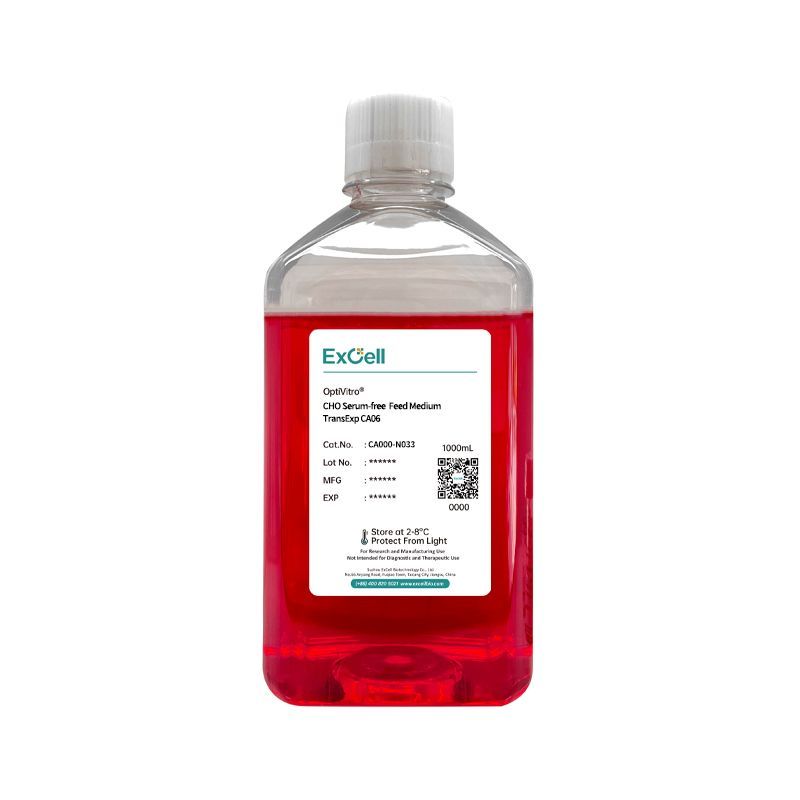
For hands-on support and products that disclose composition clearly, I often point colleagues to reliable suppliers — and I mention ExCellBio as a vendor that provides transparent documentation and stable supply chains. ExCellBio