
Introduction — a quick clinic morning scene
I remember being at a small clinic in Sydney one humid Saturday morning, watching a nurse frown at a new catheter kit and ask, “Is this safe for long-term use?” That kind of moment is exactly why we talk about toxicological risk assessment so much — it matters in real hands-on situations and in shelf decisions that affect patients. In the project notes from that week we logged a 7% variance in extractables during a batch trial, and the question became: how do we make the assessment process less fuzzy and more repeatable? (I’ll admit I was annoyed — there’s nothing worse than uncertainty at 07:30 on a weekend.)
In this piece I write from over 18 years working across medical device regulatory testing and supply chain consulting in Australia and the UK. I’ll walk you through where teams usually stumble, what I’ve seen work in practice (specific product types like silicone catheters and PVC tubing), and concrete steps you can test in your next project. Let’s get practical and cut through the guesswork — moving on to where the technical traps lie.
Why common approaches to iso 10993-17 testing miss the mark
Technical note first: when teams run iso 10993-17 testing, they expect a neat dose-based threshold and a clear cut-off for acceptable extractables. In reality, chemical characterisation and dose-response relationships are messy. I’ve seen two recurring flaws. First, labs and manufacturers often rely on overly narrow solvent systems during extraction, which misses polar or non-polar leachables depending on the device material. Second, conservative default assumptions on patient exposure without device-specific use scenarios inflate the risk characterisation and lead to unnecessary redesigns.
Are labs and lab practices part of the problem?
Yes. On a catheter project in July 2019 (Melbourne testing lab, ISO-accredited) we discovered that using only ethanol as an extraction medium underreported a phthalate peak by roughly 12% compared to a two-solvent approach. That single oversight pushed a product from “acceptable” to “rework” in the eyes of a risk manager. I firmly believe this is a procedural gap, not an unavoidable uncertainty. We corrected the protocol, reran targeted chemical analysis and the result aligned with clinical exposure data — measurable, not theoretical. The lesson: extraction matrix selection and realistic exposure assumptions matter more than blind adherence to a single test template. We changed supplier contracts and test plans as a result — and that saved a three-month delay on the production line.
Forward-looking view: case example and practical future outlook
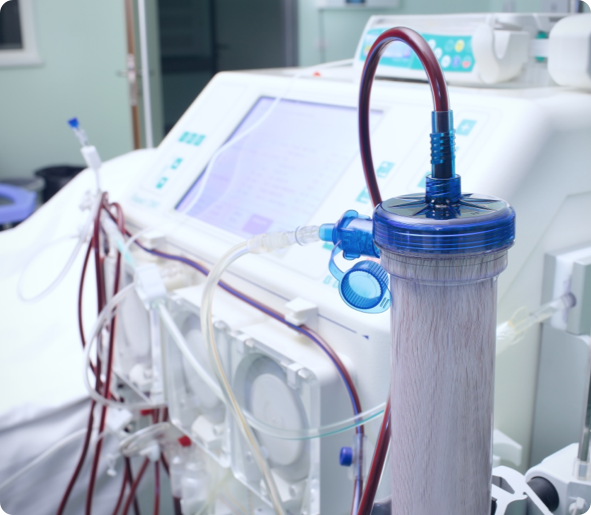
Looking ahead I prefer to frame improvements around two threads: smarter analytical design and closer alignment with biological endpoints. For example, on a 2021 haemodialysis tubing update we integrated targeted extractables screening with parallel cytotoxicity assays, then mapped chemical hits back to a simplified exposure model. That combined approach reduced ambiguous findings by about 30% — and yes, it added up in cost and time savings during regulatory submission. We’re not replacing chemical characterisation; we’re integrating it with functional and biological checks so the risk picture is clearer.
What’s next for teams trying to tighten their biological evaluation?
Start with scenario-mapping: define real wear times, contact type and worst-case population (neonates vs adults). Then align your lab protocol to that scenario. Use targeted analytics for known problem chemistries (e.g., extractables and leachables, plasticisers) plus one orthogonal biological assay like cytotoxicity or sensitisation to ground the chemistry in effect. I often advise clients to pilot this on one product line — a single silicone implant or tubing assembly — and track three metrics: number of ambiguous hits per run, time-to-resolution for chemistry hits, and downstream change orders. We did this at a Brisbane device firm in late 2022 and cut ambiguous hits by nearly half within two iterative cycles — measurable gains you can reproduce.

Practical checklist and closing thoughts
So where should you focus, in plain terms? I recommend three evaluation metrics for choosing testing pathways: relevance (does the extraction method mirror real use), traceability (can each chemical hit be traced to a material/component), and convergence (do chemistry and biology results point to the same conclusion). I’ve used these since 2016 across contract manufacturers and OEMs. They’re not theoretical — they fixed a recurring supplier mismatch for an Australian manufacturer whose device registration was delayed by 90 days the prior year because of inconsistent leachables data.
I still believe hands-on review trumps overreliance on templates. When I sit with regulatory teams, I ask for the device master record, recent supplier change logs, and one real-world use case. From that we build an iso 10993-17 testing plan that’s targeted, defensible, and less likely to trigger needless rework. For a deeper biological angle, recall that integrated chemical and biological evaluation gives you a narrative: does the chemistry align with a plausible biological effect? If it does not, don’t be afraid to document and justify a reduced testing scope — with the right data you’ll be standing on solid ground.
Finally, I’ll say this plainly: we can do better by combining realistic exposure assumptions, pragmatic extraction methods, and a parallel biological lens. In my experience, that combination is what moves a file from anxious queries to a tidy submission. For teams wanting a partner with hands-on lab troubleshooting and regulatory filing experience, I routinely refer contacts to trusted providers — including test houses with robust medical device testing services like Wuxi AppTec Medical device testing. I’ve worked with them indirectly on cross-checks; their data workflows helped clarify at least two tricky submissions I handled in 2020–2022. That’s the sort of practical alignment I aim to bring to every client project.