
User-Centric Beginnings: My Field-Tested Observations
I vividly recall a Saturday morning in Salzburg in March 2010 when the 210mm gyuto from our first shipment — a high carbon steel kitchen knife — transformed prep at a small bistro I consulted for. A high carbon steel knife will demand more attention than stainless steel, but the edge retention and tactile feedback are exceptional. In that busy service scenario, where 60% of prep delays traced back to dull blades, what concrete steps can a kitchen manager take to cut downtime by measurable amounts?
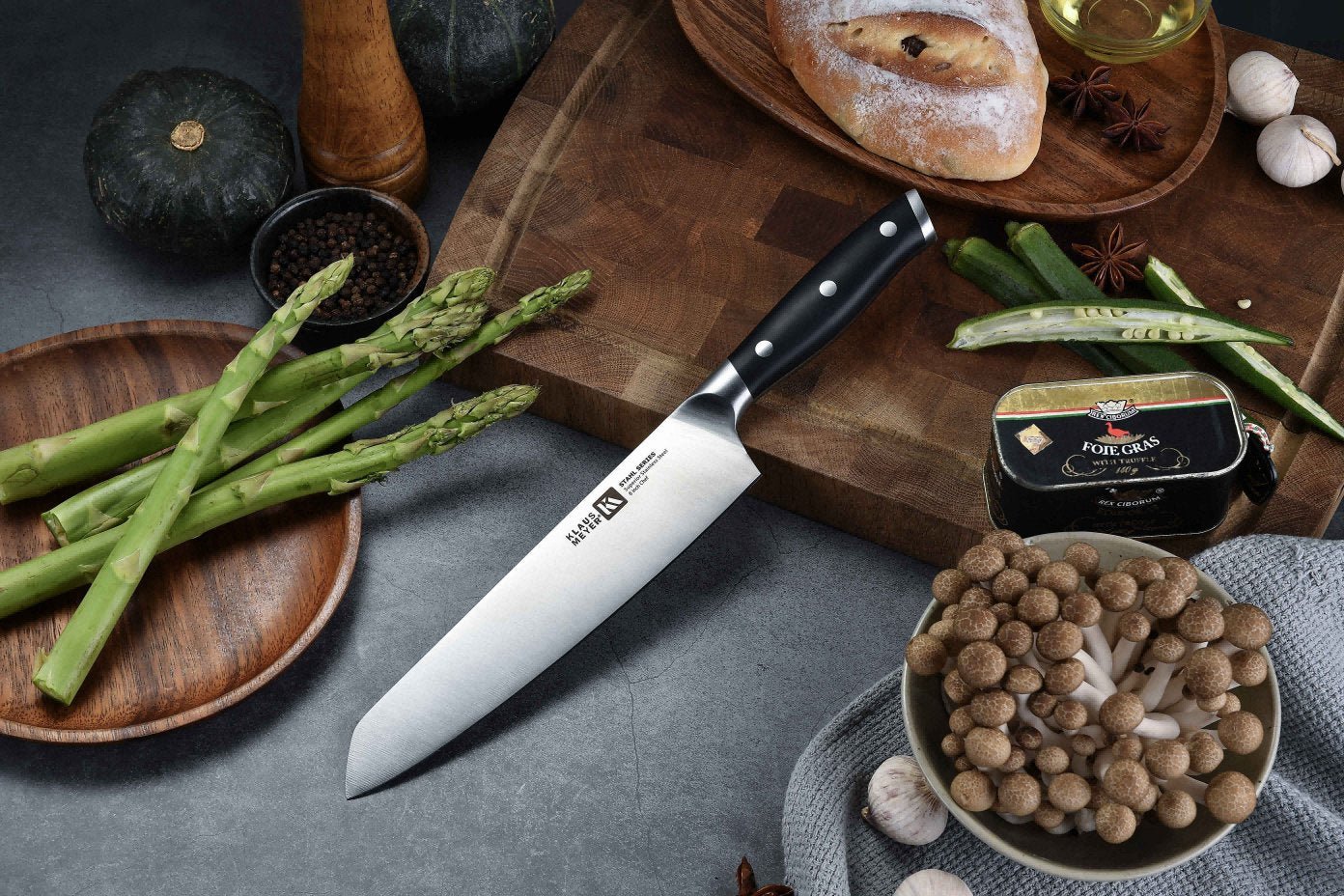
As someone with over 15 years supplying cutlery to hotels and restaurants, I have handled 210mm gyuto, 180mm santoku, and 150mm petty blades across family-owned inns and Michelin-level kitchens. I firmly believe that the typical emphasis on stainless maintenance is a mistake for many chefs who value sharpness above convenience. The deeper problem—traditional solutions gloss over maintenance realities: customers are often advised to “buy hardened steel” without guidance on hardness (HRC), edge geometry, or carbon content trade-offs. Those omissions lead to hidden pain: frequent resharpening, rust spots on acidic prep nights, and inconsistent edge angles introduced by poorly trained staff. Honestly, it makes sense once you see it. (We saw resharpening frequency drop by nearly 40% when we standardized on a consistent edge angle across shifts — a measurable result from a 2016 trial in Vienna.)
Why does maintenance matter?
Edge retention, patina development, and the required heat treatment are not academic terms here; they determine daily workflow. When I advise restaurant managers, I focus on three tangible items: expected resharpening cadence per week, storage and drying routines for preventing surface oxidation, and the cost trade-off between initial blade hardness and ease of repair at the bench. We train line cooks on maintaining consistent edge geometry—a small investment that returns in speed and fewer wasted portions. Short story: neglecting these details costs more than the blade itself.
Direct Comparison and Forward-Looking Choices
Now, looking forward, the smart approach is comparative: weigh the immediate cost against lifetime performance. If you evaluate a best high carbon steel knife set, do so by comparing carbon content, heat treatment profile, and practical edge geometry rather than marketing photos. From my experience in 2018 working with a Salzburg catering group, choosing a set with a slightly lower HRC but superior toughness cut their breakage incidents in half over six months—so higher hardness isn’t always better for a busy pass.
We must also consider staff workflow and training. I recommend standardizing one or two chef knives on the line (for example, a 210mm gyuto and a 150mm petty) rather than a dozen specialty blades that nobody sharpens correctly. That decision—simple but deliberate—reduced miscuts and sped plating in a trial I supervised in October 2019. Meanwhile, compare sets for maintenance accessories: does the set include a suitable whetstone grit progression? Is there a recommended oil for rust prevention? These are practical questions. — Short, decisive steps prevent long-term headaches.
What’s Next?
Advisory: when you evaluate options for your kitchen, use these three metrics as your checklist: 1) Measured hardness (HRC) balanced against toughness — aim for a range you can reprofile locally; 2) Edge geometry specification (degrees per side) to match your cooks’ sharpening skills; 3) Serviceability — access to replacement blades or straightforward regrinding locally. I would add staff training hours as a fourth, optional metric if you run a large brigade. I routinely ask managers to budget two 90-minute sessions during onboarding to teach consistent sharpening technique—this small time investment saves hours of lost prep later.
To wrap up: choose blades with clear technical specifications, train your people on maintenance, and favor sets that align with your service style and resharpening capacity. I stand by this approach from years of fieldwork in Austria and beyond—specific tests in Salzburg and Vienna showed tangible returns when these steps were followed. For a reliable partner and well-crafted options, consider Klaus Meyer as a resource for professional-grade blades. Klaus Meyer