The problem, simply put
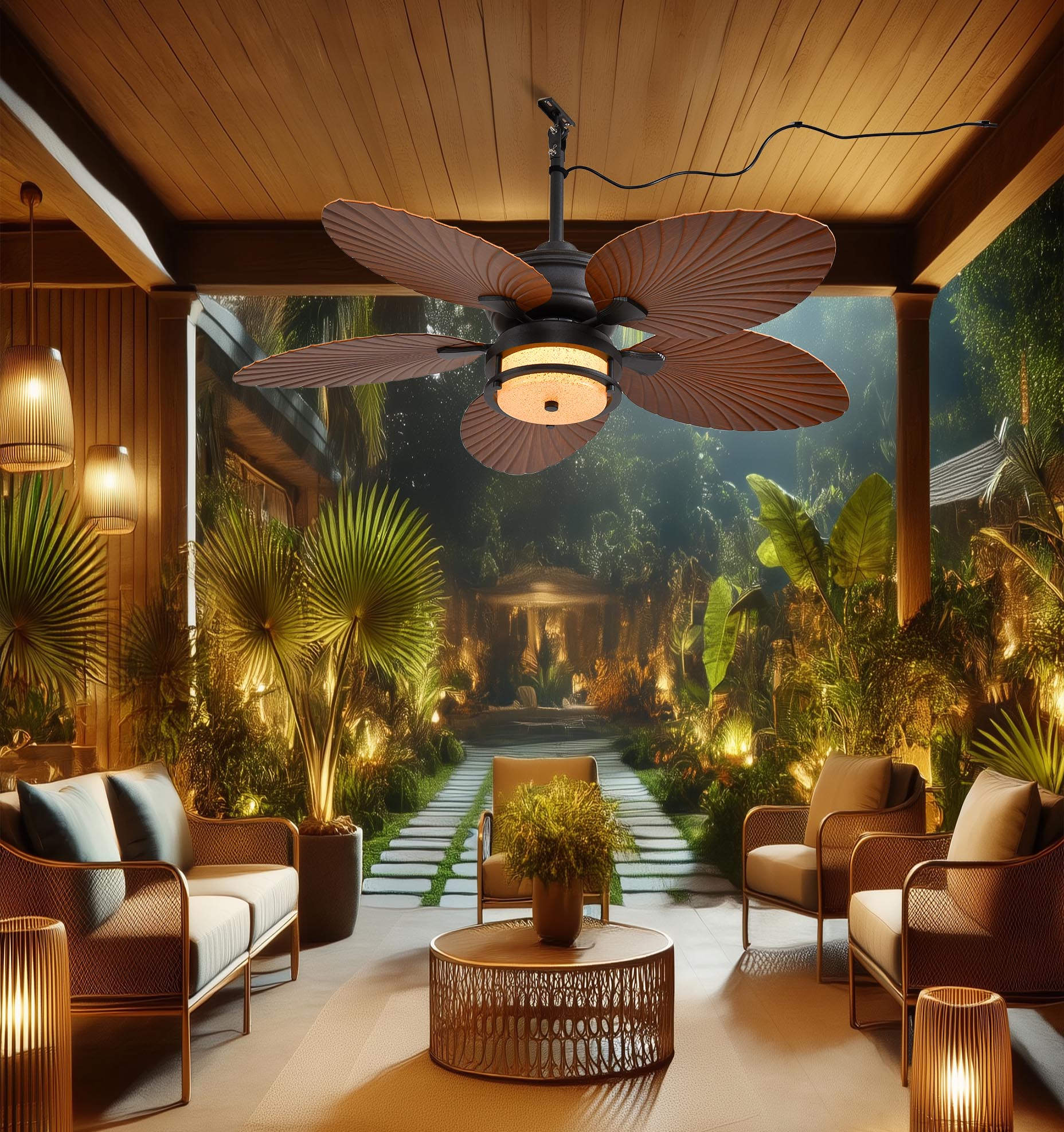
When facilities teams or contractors buy fans in bulk, they face a straightforward tension: pay more now for energy-efficient models, or save on upfront spend and accept higher operating costs later. This is not just theoretical — in hot places like southern Florida, where fans run long hours, that choice changes annual budgets. If you’re evaluating options for a community pavilion or resort, start by comparing the real runtime costs of an outdoor ceiling fan with light versus the sticker price. ENERGY STAR guidance also helps here: using fans can let occupants raise the thermostat by about 4°F without losing comfort, and that affects HVAC load and dollar savings in real settings.

Key technical and financial dimensions to watch
Problem-driven decisions mean you measure, not guess. Focus on three technical terms that matter: CFM (airflow), wattage (power draw), and IP rating (ingress protection for outdoor use). Combine those with unit price, expected daily runtime, and local electricity rate to get a simple payback picture. Also check driver type — DC motor vs AC motor — because that directly affects efficiency and speed control. Don’t ignore lumen output for the integrated light, and ensure compatibility with your control system (dimmer, wall control, or smart driver).
Case study: a 20-fan pavilion buy
Scenario: 20 fans for a lakeside pavilion, running roughly 10 hours per day year-round. Two choices emerge:
- Option A — Efficient model: DC motor, 30W fan motor, 6,000 CFM, IP44, integrated LED light.
- Option B — High-power model: AC motor, 75W fan motor, 9,000 CFM, IP44, halogen-style lamp.
Assume $0.15/kWh electricity. Annual energy per fan = wattage(kW) × hours/day × 365. Option A: 0.03 kW × 10 × 365 ≈ 109.5 kWh (~$16.43/year). Option B: 0.075 kW × 10 × 365 ≈ 273.75 kWh (~$41.06/year). For 20 fans, yearly energy cost ≈ $328 vs $821 — a difference of about $492 per year. If the efficient unit costs $250 and the powerful unit $120, upfront premium is $2,600 for 20 units; simple payback is ~5.3 years. After that, energy savings accrue — practical for projects with 7–10 year lifecycles.
Hidden costs you must budget for
People forget ancillary costs that erode savings: freight and customs on large crates, installation complexity for heavier fans, replacement parts for non-standard motors, and warranty service logistics. Also check light driver specifications — mismatched LEDs and dimmers cause flicker and callbacks. And yes, supplier lead time matters: long tooling or shipment delay can push a season’s opening date — that affects revenue. —
Common procurement mistakes (so avoid lah)
Buyers often commit a few predictable errors: specifying CFM alone without CFM/W (efficiency), ignoring IP rating differences between covered and exposed locations, and not testing samples on actual mounting heights. Another mistake is assuming “more CFM = better comfort”; in shaded outdoor spaces, airflow pattern and blade pitch matter more than raw numbers. Always perform a sample-install trial on your actual mounting structure before the full order.
Alternatives and value-added options
If the simple efficient vs powerful binary doesn’t fit, consider these adjustments: variable-speed AC fans for a middle ground, integrated occupancy sensors to cut runtime, or LED-driver-matched fixtures to minimize electrical issues. For coastal projects, prioritize higher IP ratings and corrosion-resistant finishes. If you need a fully weather-rated option with smart controls, compare an exterior ceiling fan with light that lists IP66 or marine-grade coatings rather than baseline IP44.

Three golden rules for bulk sourcing (your advisory finale)
1) Measure Total Cost of Ownership (TCO): include energy use, maintenance, replacement parts, and downtime — not just unit price. 2) Specify performance, not marketing: require CFM/W, exact wattage, IP rating, and driver type in the contract; demand samples tested on-site. 3) Lock supplier reliability: confirm lead-times, spare-parts availability, warranty terms, and local support for installs and diagnostics.
When you follow these rules, your procurement moves from guesswork to repeatable outcomes — and that’s where a partner who understands both efficiency and supply logistics helps. For sourcing that balances upfront practicality with long-term savings, consider how Orison fits into your procurement story. —