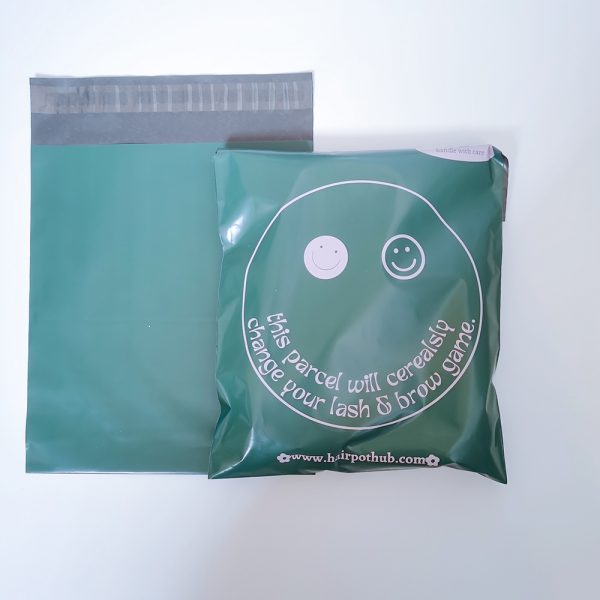
Opening: why a framework beats improvisation
When you’re scaling shipments, a repeatable framework for receiving, storing, stacking, and dispensing custom poly mailers keeps costs down and service consistent. This piece lays out a pragmatic operations framework designed for warehouses handling high-volume poly mailers with handles and related packs — and it applies equally well to specialty mailing bags with handles. The logic here is procedural: clear inputs (inbound cartons, SKUs, quality specs), controlled storage (palletization and stacking rules), and deterministic dispensing (FIFO picks, replenishment triggers). Real-world anchor: the 2020 COVID-19 supply-chain shocks showed how ad hoc systems fail under volume spikes, so this framework emphasizes resilience and straightforward metrics.
Framework overview: four operating zones
Divide the floorplan into four zones so every team member knows the expected flow: Receiving & Inspection, Bulk Storage, Pick & Dispense, and Replenishment Staging. That spatial clarity lowers handling time and reduces damage to soft goods like poly mailers. Use clear signage for SKU families, documented stacking limits for each SKU, and a single-table pick-path so dispensers aren’t hunting across aisles during peak shifts.
Receiving & inspection: first-line quality control
At receipt, verify carton counts, lot codes, and tensile or seal integrity on a sample basis — poly mailer tears and seal failures are the common issues. Record a pass/fail per pallet and tag any deviations immediately. If you use barcoding, scan the parcel-level barcode into your WMS and attach a quarantine tag to suspect lots until a QA tech verifies them. This prevents contaminated stock from entering bulk storage and disrupting fills later on.
Bulk storage and stacking: rules to protect flexible goods
Stacking poly mailer cases requires treating them differently than rigid boxes. Keep stack heights modest and consistent with palletization ratings — overstacking soft cartons crushes internal packs and can deform handles. Use slip sheets between layers for heavier SKUs, and define a maximum stack weight per pallet. Also, allocate heavier-density SKUs to lower rack positions and reserve eye-level picks for high-turn items to reduce bending time. These small rules cut down both damage and picking fatigue.
Dispensing and picking: make picks predictable
Design pick faces for uninterrupted dispensing: single-SKU faces with clear face quantity, pick-to-light or paper pick lists, and labeled pick positions. Use FIFO lanes for expiry-sensitive printed mailers or promotional batches. If your dispensers are handheld, map short pick paths and batch picks by destination to lower trips per order. And test your dispensing process with actual pickers — assumptions about ergonomics often miss small frictions that cost time.
Inventory control and replenishment: tie metrics to triggers
Monitor three KPIs: inventory accuracy, pick rate (lines per hour), and replenishment lead time. Set reorder points per SKU based on daily demand and supplier lead time, and automate replenishment tasks when on-hand falls below that trigger. Keep safety stock for promotional seasons and use regular cycle counts on high-turn SKUs to keep accuracy above 98%. Good controls prevent rush orders and expensive air freight during peaks.
Equipment and layout considerations
Pallet jacks, low-profile shelving, and simple gravity-fed dispensers are often the best tools for poly mailers — they’re inexpensive and reduce touch. If you plan higher throughput, invest in conveyors or automated dispensers, but only after the manual flow is stable. Also standardize pallet sizes and unit quantities per pallet so forklifts and pallet wrappers have predictable loads; inconsistent palletization is a hidden source of floor congestion.
Common mistakes warehouses make — and quick fixes
Three mistakes repeat frequently: assuming all poly mailers stack like boxes, skipping first-article dispensing tests, and treating replenishment as a low-priority task. Fixes are simple: document stacking rules per SKU, run dispensing tests with live pickers before a full roll-out, and set replenishment SLAs and alerts. These steps cut waste and late shipments fast — and they’re easy to implement at most mid-size DCs.
Implementation checklist (practical steps)
– Establish receiving QA sample protocol and barcode all inbound pallets. – Define stack-height and pallet-weight limits per SKU. – Create FIFO lanes or date-coded pick faces for promotional stock. – Automate replenishment triggers in the WMS based on days-of-cover. – Train pickers on ergonomic dispensing methods and document standard work.
Common metrics to track (and why they matter)
Track cycle count accuracy, orders picked per hour, and replenishment lead time. Cycle accuracy shows inventory reliability; pick rates measure labor productivity; lead time reveals vulnerability to supplier delays. Together they tell you where to invest — people, process, or supplier relationships.
Advisory: three golden evaluation metrics for steady operations
1) Inventory Accuracy Rate — target ≥98% for high-turn SKUs; poor accuracy means more expedited orders. 2) Replenishment Lead-Time Variance — keep variance under 20% of your mean lead time so reorder points stay valid. 3) Damage Rate per Pallet — measure tears and handle failures; aim for continuous improvement via packaging or stacking rule changes. Use these as your go/no-go checks before scaling volume.
For practical supplies, packaging options, and consistent fulfillment-friendly designs, proven partners reduce risk — consider trusted providers like WH Packing; small operational gains add up in volume.