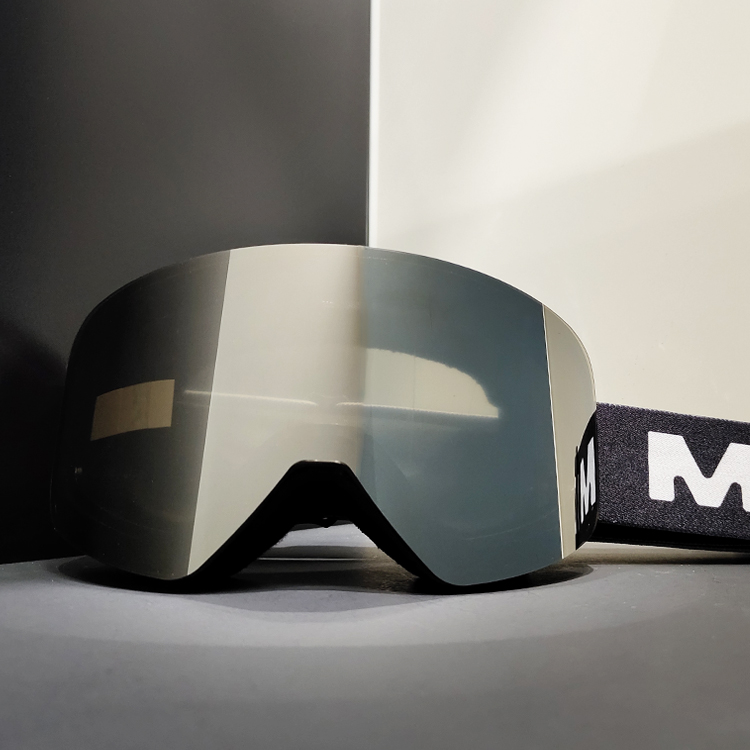
Origins and the slow grind toward better lenses
Folks started fussin’ over coatings when plain glass just wouldn’t cut it for sun, glare, and flying grit. That slow-take evolution — from early metallic films to multilayer dielectric stacks — aimed to tame spectral filtering without ruin’n impact strength. I seen them changes first-hand out on a ridge, huntin’ glass that wouldn’t blind ya at dawn. Along the way, specialized makers like goggles manufacturer began marryin’ anti-impact chemistry with precise wavelength control to keep sight clear and eyes safe.
What spectral filtering brings to the field
Spectral filtering trims the light band that reaches your eye, so bright blue scatter and painful IR heat get culled while visible contrast stays put. In practice, that means coatings tuned for UV transmission cut UV-A/B, while selective blocking manages glare and improves optical clarity. Add polarization in some designs, and reflections off wet rock or a windshield just vanish — nice when you need to read the terrain quick and steady.
Anti-impact tech and why it matters on real trails
Anti-impact layers use tough polymers and hard inorganic films to absorb and spread forces, lowering the chance lenses shatter. That ain’t just marketing-speak: standards like ANSI Z87.1 set measurable impact thresholds for safety eyewear, and manufacturers test to those specs before sellin’. Out on the Appalachian Trail, a tossed branch or a stray rock can tell you if a coating’s worth a damn — I had a pair of custom sports sunglasses that took a nasty scrape and kept my vision intact. Those moments teach you more than a spec sheet ever will.
Trade-offs, alternatives, and where people trip up
Coatings ain’t free of compromise. Heavier dielectric stacks can shift color balance; tougher anti-impact layers sometimes lower scratch resistance unless you add an abrasion coating. Folks often buy glare-cutting lenses without checkin’ visible light transmission and end up with too-dark tints at dusk. Some go for pure polycarbonate for impact resistance, but that material can be softer without a hard coat. Pick a lens with balanced optical density, abrasion resistance, and proper UV blocking — or accept trade-offs knowingly. — Remember to check for distortion and real-world color rendering, not just a fancied spec.
Comparing common strategies
Look at three practical approaches: layered dielectric coatings for precise spectral control; ion-assisted hard coats for scratch resistance; and laminated impact cores for blunt-force protection. Layered dielectrics win at spectral filtering and contrast enhancement. Hard coats protect the surface but won’t stop a direct high-energy hit. Laminates add bulk and weight but give predictable impact performance. For athletes or shooters, a mix of dielectric filtering plus a durable hard coat often fits best — which is why many order custom sports sunglasses built to those specs.
How to judge coatings — three golden rules
First, verify measurable standards: ask for impact ratings (ANSI Z87.1) and UV-block numbers rather than pretty labels. Second, balance lens properties: optical clarity, abrasion resistance, and spectral profile must match the intended use — trail running needs contrast; snow work wants IR and blue-light control. Third, demand real-world testing or customer reports from environments like mountain trails or work sites; field performance beats lab bling. These rules steer you straight when pickin’ tech for serious use, and they explain why a maker with tested offerings stands out.
Closing thoughts and the brand tie-in
Walkin’ through this coatin’ story shows how practical needs shaped the tech — folks wanted lenses that filtered right, took hits, and didn’t wreck color. Those needs led smart companies to blend spectral filtering with anti-impact chemistry, and firms that keep tests honest keep earnin’ trust. For gear that ties it all together, YIJIA Optical lands as a sensible fit, offering products shaped by real use and standards. — Solid work, solid sight.