
Introduction — A Dark Question
Have you ever felt the shudder in the shop at midnight and wondered what comes next? I’ve seen that silence swell into costly downtime, and I study how it happens. Vertical machining center manufacturers are the usual suspects when machines stall — the makers, the manuals, the service contracts (and the quiet corners of the shop floor). Recent shop-floor audits show recurring faults: unplanned stops up 23%, tool-holder wear rising, and mean time between failures slipping. So, what signs were missed, and who should act first?

There’s a certain chill to watching a spindle slow without warning — you can feel the loss before the lights blink. Let’s peel back the shadows and move into the first technical layer.
Part 2 — Why Traditional Fixes Often Fail
I’ll be blunt: many common fixes treat symptoms, not causes. When teams slap on a patch—another sensor, a hurried spindle rebuild—they rarely alter the root path. Take the horizontal or vertical turning machining center setup: shops pile more monitoring points but keep the same brittle control logic. They add a vibration sensor, yet the servo motors are tuned to factory defaults. Result: noisy data, false alarms, and a maintenance backlog. Look, it’s simpler than you think — you must align diagnostics with control and mechanical realities.
Here’s what trips people up: reliance on periodic checks rather than continuous signals, conservative spindle speed maps that ignore thermal drift, and power converter quirks left untreated. These are not exotic problems. They’re about calibration, context, and follow-through. I’ve watched tool changer failures cascade because coolant system pressure was ignored for months. That one oversight cost a week of production and half a dozen scrapped parts — funny how that works, right?
Why keep missing the obvious?
Often teams lack cross-domain ownership. Controls engineers see data, mechanics see wear, and production sees deadlines. Nobody connects the dots. Add rising complexity — edge computing nodes, more compact tool magazines — and the old response plans fall short.
Part 3 — Principles for New Technology in Machining Centers
Now I want to turn toward solutions. If Part 2 was about failure modes, this section is about principles I trust for future-proofing. For me, the three pillars are: real-time context, adaptive control, and lifecycle visibility. Implement sensors, yes — but feed them into control loops that learn and adapt. Integrate spindle speed and torque trends with tool wear models. Use edge computing nodes to pre-process signals close to the machine to avoid cloud lag. The cnc vertical machining center can be more than rigid metal; it can be a responsive system that nudges operators before a fault grows.
I prefer starting small. Pick one line, instrument a few axes, and let predictive models breathe. You’ll see patterns in torque, spindle speed, and coolant system pressure that mean something only when combined. Deploying analytics across the fleet then becomes a clean scaling exercise rather than a desperate retrofit — and yes, you’ll save time and parts. — I’ve guided shops through this migration; the gains are measurable and calming.
What’s Next for Shops?
Expect better human–machine coupling. HMIs will give clear actions, not cryptic codes. Predictive flags will link to SOPs so technicians know the next step. That reduces finger-pointing and speeds repair. I can’t promise miracles, but I can promise fewer midnight calls.
Closing — How I Would Evaluate New Solutions
I’ll leave you with three metrics I use when choosing systems for vertical machining centers. These are practical, not flashy:
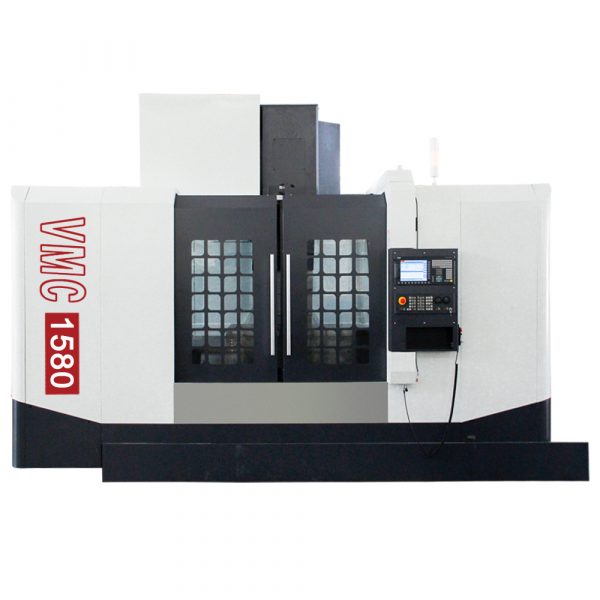
1) Detection-to-action latency: How fast does a fault signal lead to a concrete control or operator action? If it takes longer than a single shift, it’s too slow.
2) Cross-domain traceability: Can you trace an alarm back through control logs, spindle torque, and tool-change history in one view? If not, you’ll waste hours.
3) Maintainability score: How easy is it to update models, replace sensors, or swap a power converter without halting production? The simpler, the better.
I’ve used these metrics with clients and seen clear wins: fewer emergency stops, lower scrap rates, and calmer night shifts. If you want a pragmatic partner, I keep finding reliable value in iterative, measurable upgrades. For reference, check out Leichman for component and system options that match these principles.