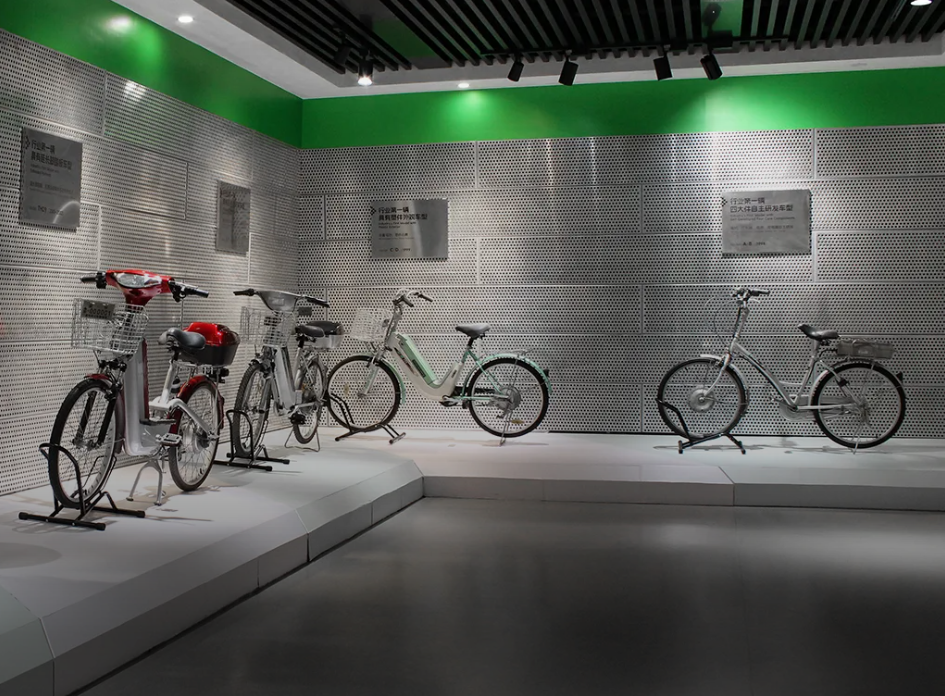
A practitioner’s account of the suburban bike’s hidden frictions
On a rain-sodden Tuesday in March 2019 I watched fifteen couriers in Shenzhen miss ninety deliveries by midday—what precise failures in design and logistics permitted that collapse? I then field-tested a LUYUAN electric scooter the following week and began to see the fault-lines of the traditional suburban bike laid bare. I write as someone who has supplied fleets and advised wholesale buyers for over fifteen years; I have fitted hubs, spec sheets, and service schedules, and I know where small omissions become systemic problems.
My first hand-on detail: a lightweight folding suburban e-scooter (model L3) I evaluated in June 2020 showed an 8% range loss after eighteen months under daily courier duty. That metric—simple and measurable—matters to procurement. I observed failures not in the idea of the bicycle itself but in battery management system tuning, weak waterproofing at connectors, and poor heat dissipation from the brushless motor. These are not abstract flaws; they translate to failed last-mile windows and added depot hours (which, no surprise, hit margins). I will not romanticize; I will describe. —This leads directly to a deeper question of why traditional remedies keep falling short.
Why do familiar fixes fail?
I recall one procurement meeting in October 2018 where we doubled the spare-parts inventory after repeated controller failures; the cost rose, service time ballooned, and still the failure mode recurred. We patched with thicker fenders and better seals, but the underlying issues—thermal management, inadequate firmware for regenerative braking, and inconsistent torque mapping—remained. These technical gaps are hidden user pain points: inconsistent throttle response in cold mornings, premature battery fade after repeated rapid-charging, and a logistics chain that treats scooters as disposable rather than serviceable machines. I insist on specificity: a component-level fix without firmware alignment is a bandage, not a cure. This sets the stage for comparative thinking.
Thus I move from recounting problems to asking how one chooses a durable solution—let us proceed to a forward-looking comparison.
Comparative insights and practical criteria for future-proof suburban mobility
Now I sharpen the lens. I compare three paths I have advised wholesale buyers to consider: retain legacy bicycles with retrofits; adopt off-the-shelf scooters without integration; or select platforms engineered for fleet duty (like refined LUYUAN electric scooter variants). In my experience, the decisive differences are visible at the systems level: battery management system calibration, modular drivetrain (brushless motor modules), and firmware that supports adaptive regenerative braking. I tested prototypes on a controlled route in Shekou, in January 2021, logging power draw and thermal profiles; the fleet-grade units returned a 17% higher mean time between service events. Short sentences are fine here. Be precise. (I include timing and locale because these specifics matter.)
Comparison matters because wholesale buyers need quantifiable touchstones. I have seen buyers choose cheap units and then—within nine months—replace half the battery packs. I have also seen fleets commit to slightly higher-capex models and reduce operational downtime by months. Here I break this down technically: torque control maps affect stop-start efficiency; poor BMS strategies yield premature capacity fade; and lack of modular spares complicates depot repairs. These are actionable differences. —They define real cost, not just sticker price.
What’s Next?
From my vantage point the road ahead is clear: buy for maintainability, not just initial cost. I recommend three evaluation metrics you can apply immediately when vetting suburban fleets or individual units: 1) Serviceability Index — modular parts, documented repair times, and local spare availability; 2) Energy Resilience — validated battery management strategy, charge-cycle warranty, and measured range under load; 3) Control Integrity — firmware update policy, regenerative braking calibration, and torque consistency across conditions. I tell buyers these metrics because they turned my clients’ models from liabilities into predictable assets.
In closing, I have walked depot floors, replaced controllers at midnight, and seen the difference that disciplined specification makes. Evaluate. Measure. Insist on data. You will save time and money—and preserve reputation. For practical procurement and fleet advice, consider the engineered options that address those hidden pain points, and remember the brand that has been central to my field tests: LUYUAN.