Quick take — why this matters
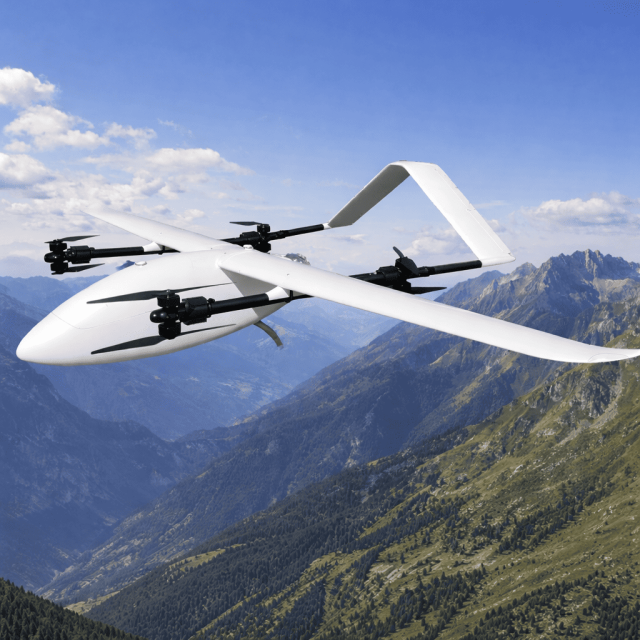
Let’s cut to it: radar folks and field crews need tools that actually separate a drone from sea clutter or a fishing boat. A vtol fixed wing drone brings a different wake and signature than a conventional UAV, and that changes how micro-Doppler and clutter suppression perform on the line.

What micro-Doppler and clutter suppression do on the job
Micro-Doppler captures tiny motion patterns — rotor blade beats, control-surface flutter — and turns them into a telltale fingerprint. Clutter suppression strips background returns so those fingerprints show up. Add radar cross-section (RCS) quirks from composite airframes, and you get a puzzle: small RCS plus rotor-induced micro-Doppler inside heavy sea or urban clutter makes reliable detection hard. On patrols around the South China Sea, operators have seen how clutter can mask tactical drones during low-altitude transit — that real-world pattern matters when you tune filters and detection thresholds.

Side-by-side: common detection approaches
Here’s what teams actually compare in the field: classic Doppler filtering vs. micro-Doppler pattern matching; adaptive clutter suppression vs. static notch filters; simple CFAR thresholding vs. ML-based classifiers. The trade-offs are plain. Adaptive clutter suppression keeps sensitivity in shifting environments but needs more compute. Micro-Doppler boosts discrimination of rotorcraft signatures but struggles when a VTOL transitions to forward flight — that’s where vertical-hold signatures smear. For fixed wing drone vertical takeoff designs, the transition phase creates signature blending that fools naive classifiers.
Field mistakes that cost detection time and trust
Teams often tune for one scenario and forget others. They set CFAR for a calm sea and get blind spots when waves pick up — and yes, false alarm rates spike. Another common slip: dumping raw micro-Doppler into a classifier without normalizing for speed or altitude. That’s a quick way to retrain models every deployment. Keep data labeling tight, and store examples across conditions — shore, urban, and over-water ops. Also, don’t ignore platform metadata like heading and speed; pairing that with micro-Doppler patterns knocks down misidentification rates faster than fancy post-processing — small wins count.
Practical comparisons to guide procurement and tuning
When you’re sizing systems, compare along three axes: detection robustness, compute footprint, and adaptability. Robustness means reliable micro-Doppler extraction in high-clutter zones; compute footprint dictates whether you can run algorithms on-board or need edge/central processing; adaptability covers how fast a system re-tunes when environments shift. For many patrol units, solutions that balance all three beat specialists that excel at one and fail the others.
Three golden rules for choosing and deploying systems
1) Prioritize signal-to-noise performance over raw algorithmic bells and whistles. If the radar hardware can’t pull clean micro-Doppler out of the noise, no software saves you.
2) Match clutter suppression strategy to the mission environment and platform type. Adaptive filters and model-based suppression work best for mixed operations involving coastal, urban, and inland flights — especially with VTOL transitions.
3) Require field validation across realistic conditions before buy-in. Insist on test data that includes takeoff/hover transitions, low-altitude ingress, and clutter-heavy returns. Those tests reveal failure modes faster than lab demos do.
Wrap — what this means for teams and gear
Put simply: pick systems that give clean micro-Doppler, flexible clutter suppression, and realistic test proof. That approach saves time in deployment and reduces false alarms. For hands-on comparisons, technical breakdowns, and platform guides that tie these trade-offs to real gear, check practical resources — Military Hub — where you’ll find field-centered analysis and specs that matter. —