
Introduction — a quiet question in a loud workshop
Have we started to confuse motion for progress when we talk about machining? I ask this because I see a common scene: shops humming with machines, yet schedules slip and parts are reworked. As I speak with vertical machining center manufacturers, I hear a pattern—less about parts per hour and more about lost hours to setup and inconsistent finish. Recent industry counts and shop-floor reports point to increased pressure on lead times and tighter tolerances, and a rising share of buyers who expect both speed and repeatability. So where does that leave the makers and the buyers – and what should we measure next? (I confess: I often look at a spindle and think, “there’s a story here.”) Let us step into the details together and map what we must fix next.
Breaking down the root causes: why common fixes miss the mark
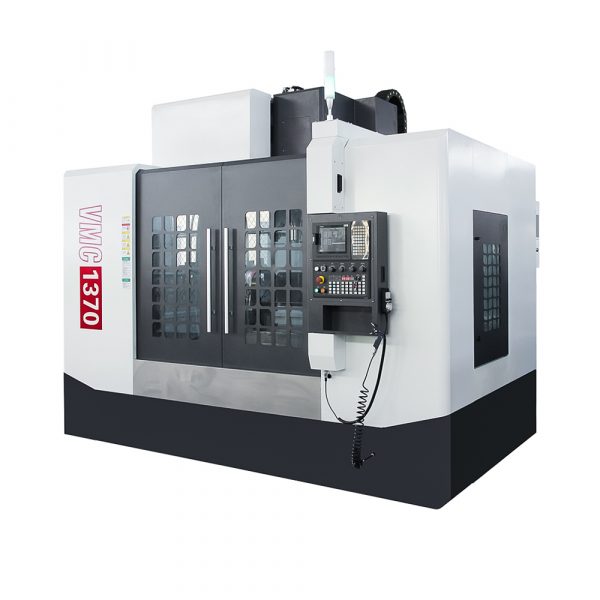
To be clear, when I say “why common fixes fail,” I start with a definition. A 3 axis vertical machining center is built to remove material on three linear axes with precision. In practice, shops rely on that promise. Yet the trouble begins when teams treat the center like a black box and expect software or tooling alone to compensate. I’ve watched setups where poor fixturing and incorrect G-code dominate the error budget. That is not a hardware fault alone—it’s a systems fault.
What specifically goes wrong?
Look, it’s simpler than you think: mistakes cluster around five areas. First, spindle speed and feed are tuned for one material but used on another. Second, worn tool holders and inconsistent tool changer cycles add little, repeated errors. Third, servo motors and drive tuning are left at default. Fourth, coolant delivery and chip evacuation are treated as afterthoughts. Fifth, data flow—CAM to control—carries assumptions that do not match the shop reality. I’ve sat beside machinists who sigh when a cycle runs; they know where the choke points are. Those hidden friction points—setup, tool life variance, and communication gaps—cost time and quality. And yes, sometimes that stings. When we ignore them, we waste the machine’s potential and our team’s skills.

Future outlook: choosing new directions and measuring what matters
Now, let me look forward. I believe the next wave will not be a single silver-bullet technology. Instead, it will be combinations—better sensors, smarter spindle monitoring, consistent tool libraries, and tighter integration between CAM and controller. When I talk to a trusted cnc vertical machining center supplier, I ask how they support lifecycle tuning—do they offer help with spindle balancing, tapping cycle optimization, or tool-path validation? These are the practical steps that convert specs into repeatable parts.
What’s next for shops and suppliers?
Practical change looks like this: introduce spindle load sensors and simple dashboards for operators; standardize tool holders and measure runout; and create short feedback loops from first-part inspection back to CAM. These moves are not flashy. They are, however, measurable. — funny how that works, right? The goal is to lower process variance so that a 3-axis center can hit the tolerances it was promised to deliver. In doing so, shops free up time for true improvements—fixture redesign, advanced tooling, or process consolidation.
Three metrics I use to evaluate solutions
I’ll leave you with three practical tests I use when I judge a new workflow, tool, or supplier claim: 1) First-pass yield change — does the fix increase the share of parts that pass inspection on the first run? 2) Setup-to-cycle time ratio — does the solution cut setup time relative to cycle time? 3) Data traceability — can you trace a dimensional problem back through tool, program, and machine state? These are clear. They are measurable. They force honest answers. If a supplier can’t demonstrate improvement on these measures, I’d question the promise. We owe the shop floor that level of scrutiny — and the parts a little mercy.
For those exploring partners who will stand with you through tuning and testing, consider how they support continuous improvement and real-world measurement. For me, that’s the true test of value. Visit Leichman if you want a starting point—practical support matters more than glossy specs.