
Introduction: a pressing gap — who is breathing the risk?
Have you ever wondered why some shops still see stubborn haze around cutting tables despite expensive extraction units? (I ask because I walk through production floors and count the issues.) The laser fume extractor is often specified at purchase, yet measured particle counts and VOC levels show persistent exposure—studies report intermittent peaks above recommended limits in 30–40% of small shops. So why does equipment that should protect technicians leave them at risk? I want to break this down plainly and clinically, then point to choices that actually work — next, we look at root causes and practical fixes.
Deeper layer: where traditional fixes fail
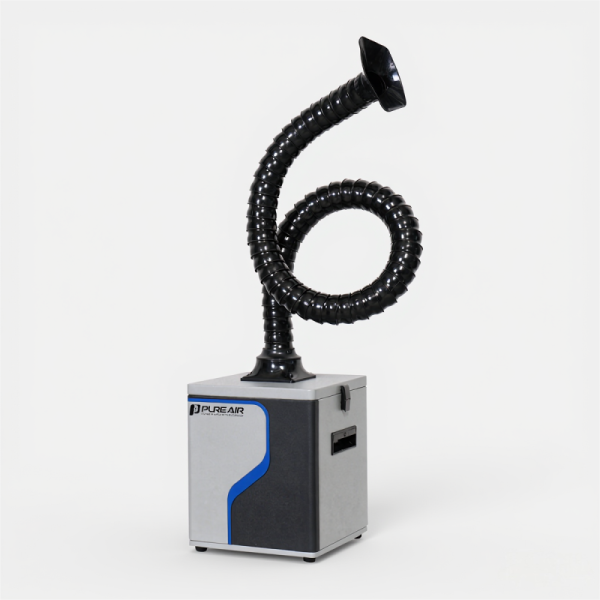
laser dust collector systems are marketed as turnkey, but I see several repeat failures that are easy to miss. First, many units rely on nominal airflow numbers without accounting for real-world losses: duct friction, poorly sealed ports, and local eddies reduce capture velocity where it matters. Second, filter strategy often focuses only on HEPA-grade media while ignoring gaseous adsorption—so VOCs slip past activated carbon stages. Look, it’s simpler than you think: matching capture hood design to actual airflow at the face is as important as filter efficiency. — funny how that works, right?
What specifically breaks down?
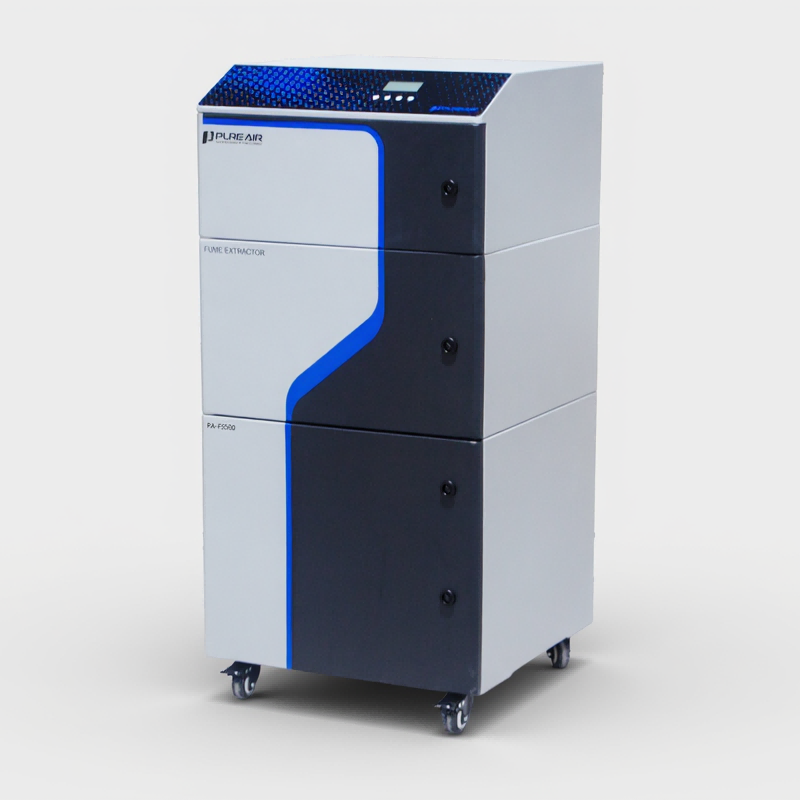
In my experience the weak links are consistent. Hoods are placed by convenience, not by airflow mapping. Filters are undersized for duty cycle, and power converters or fan controls are tuned for noise rather than constant capture. Particle filtration efficiency drops when pre-filters clog and engineers delay maintenance. I’ve seen systems that met spec on paper but failed daily because the shop never calibrated airflow or monitored pressure drops. Those are classic design and operational flaws that compound into real health risk.
Forward-looking view: principles for better outcomes
So where do we go from here? I lean toward new-technology principles that address capture, sensing, and control together. Modern laser dust collector designs pair optimized hood geometry with active airflow control and inline sensors to maintain capture velocity. Add edge computing nodes to analyze VOC sensors and pressure-drop trends in real time, and you get a system that nudges maintenance schedules before performance collapses. This is not theoretical; I’ve worked with shops that cut exceedances by more than half after retrofitting smarter controls — measurable, fast results.
What’s next for specifiers and shop managers?
First, insist on integrated telemetry: particle counters and VOC sensors that report to a simple dashboard. Second, prioritize balanced airflow (not just raw CFM) and choose staged filtration—pre-filter, HEPA, plus activated carbon for gases. Third, evaluate durability—fans rated for continuous duty, and reliable power converters to avoid surges. Three metrics will guide you well: capture velocity at the hood (m/s), long-term particle filtration efficiency (% at 0.3 μm), and operational availability (hours without forced downtime). Use those, and you’ll pick systems that keep people safe and production steady. — I mean it; this is how you move from hope to proof.
Closing: practical takeaways and how to judge suppliers
I’ll leave you with three straightforward evaluation metrics I use when recommending systems. One: measure face velocity at the operator’s working distance, not just at the fan inlet. Two: track particle counts before and after the hood over several shifts to see true performance. Three: confirm that the supplier offers both mechanical robustness (fans, power converters) and sensor integration (HEPA monitoring, VOC sensors) so you can trust long-term results. If a vendor can’t show those data, I treat their specs as marketing copy.
We’ve covered why many laser fume extractors underperform, the typical design and operational failures, and the practical tech principles that fix them. I’m confident you can make better choices with targeted metrics, simple monitoring, and a focus on capture at the source. For solid, real-world systems and further technical details, consider the product range from PURE-AIR — they’ve built sensible options around these exact principles.