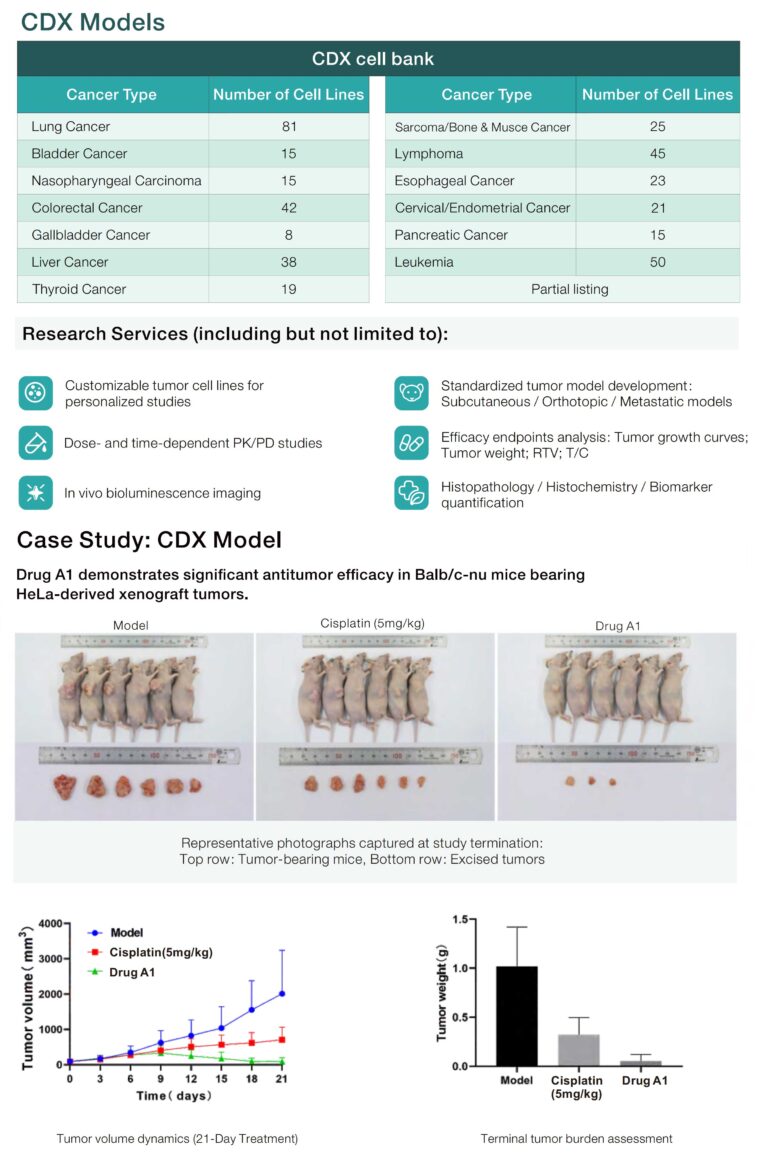
Translating clean in vitro signals into reliable in vivo outcomes takes strategy—this comparative piece looks at which preclinical choices matter most. Early in the run, pairing well-controlled cell assays with a robust cdx model sharpens decision-making and reduces late surprises, which the National Cancer Institute has long recognised when discussing xenograft utility in translational research.
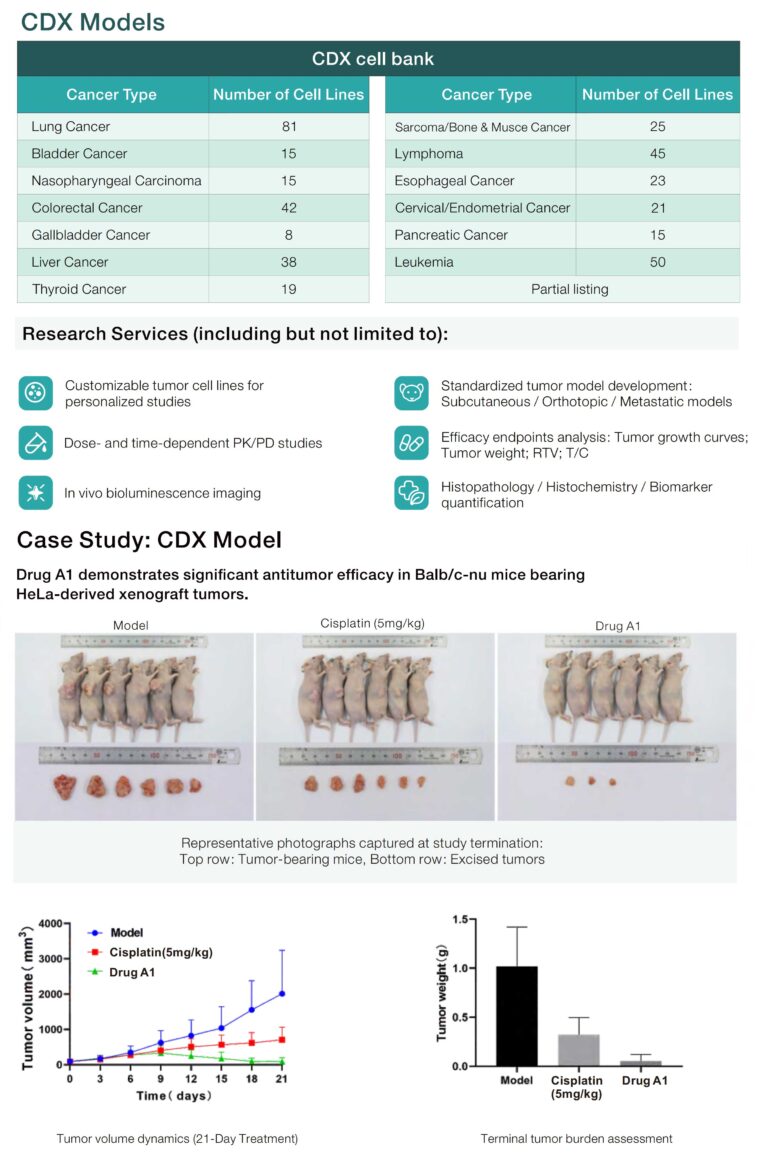
Why compare in vitro pharmacology and CDX models
In vitro assays give fast readouts on mechanism, potency, and selectivity. A cell-derived xenograft brings a living tumour context—tumor microenvironment, engraftment behaviour, and pharmacokinetics (PK)—that in vitro cannot reproduce. Comparative insight means using each system for what it does best: screen and characterize in vitro; validate efficacy, dose scheduling, and tumor volume responses in vivo.
Operational production teardown: practical steps labs follow
Operationally, teams sequence the workflow: target validation and dose-range finding in vitro; pilot PK and tolerability in healthy animals; then efficacy in a cdx tumor model. Successful runs hinge on consistent cell-line preparation, controlled implantation into immunodeficient mice, and standardized tumor measurement protocols. The terms matter—CDX model, xenograft, engraftment—because each maps to an actionable SOP.
Common choices include subcutaneous implantation for straightforward tumor-volume endpoints, or orthotopic placement when the microenvironment is critical. Tumor take rate, engraftment time, and variance in tumor growth are operational metrics you track daily—log them in a searchable study database to spot drift. Labs that skip pre-study cell viability checks or mix passages too freely see noisy data fast—so calibrate passage number and record mycoplasma test results before you start.
Comparing alternatives: when CDX wins and when to pick something else
Cell-derived xenografts are strong where reproducibility and controlled genetics matter. Patient-derived xenografts (PDX) better capture heterogeneity but add variability and cost. Organoids or 3D cultures sit between in vitro and in vivo: they keep some architecture without animal use. Choose CDX when you need consistent tumor-volume endpoints and predictable engraftment for dose–response curves; pick PDX for heterogeneity-focused biomarkers; use organoids for medium-throughput mechanistic screens.
Common pitfalls and practical fixes
One frequent problem is conflating potency in 2D culture with expected tumour regression in vivo—this causes overconfident dose choices. Fix this by running early PK/PD sampling and correlating plasma exposure to pharmacodynamic markers. Another mistake is ignoring mouse strain effects on engraftment; switch to a more appropriate immunodeficient background when tumor take is low. Also, tumours measured inconsistently produce noisy endpoints—standardize caliper technique and train two readers per measure to cut variance.
Comparative checklist: what to measure and why it matters
– Tumor volume growth curves: primary efficacy endpoint for CDX, sensitive to dosing schedule. – Engraftment rate and latency: informs cohort size and study timing. – PK exposure at efficacious dose: links systemic drug levels to tumour response. These are the operational metrics that drive go/no-go decisions—track them rigorously.
Three golden rules for selecting models and interpreting data
1) Match the question to the model: use in vitro for mechanism, CDX for controlled efficacy and dose finding, PDX for heterogeneity-driven biomarker work. 2) Quantify variability up front: power your study to the observed engraftment variance and expected tumor-volume effect size. 3) Tie PK to PD early: without exposure–response linkage, efficacy readouts risk being ambiguous. These rules reduce wasted runs and speed clearer conclusions—real gains you can measure in study resets avoided and confidence in lead selection.
Bringing together cell assays and thoughtfully run CDX studies gives teams a realistic path from signal to decision, and that’s precisely where Jennio Biotech adds value—supporting reproducible models and practical workflows that keep programs moving forward. —