
Introduction: a short shop story, hard numbers, one big question
I once walked into a small job shop where a machinist sighed and said, “If only the machine could think for itself.” That moment stuck with me—because the shop ran on machines from DMG MORI, Makino, Okuma, Haas, and Hurco, and yet cycle times still lagged. The data didn’t lie: scrap rates were climbing, setup time ate up nearly 20% of the shift, and throughput was flat for three months straight. So I asked: how do you tighten lead times without burning out your crew or your equipment? (Spoiler: it’s not just buying the most expensive controller.)
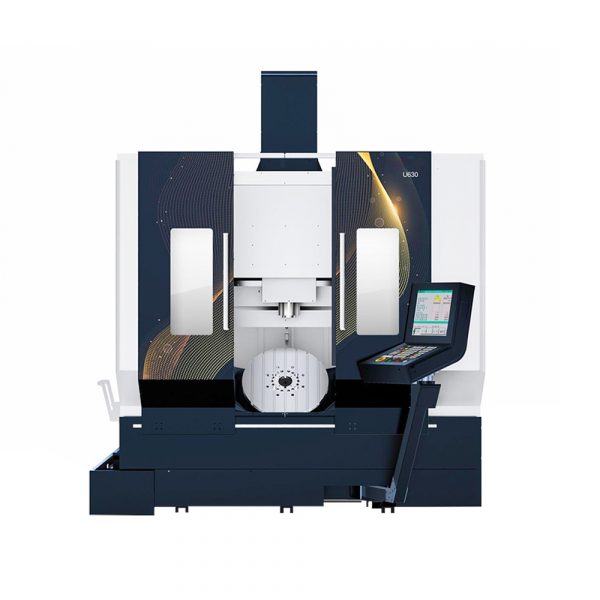
I’m writing this as someone who’s walked factory floors, sat with programmers, and watched tools snap in the first pass. I want to be clear and human about the choices you face. We’ll talk kinematics, spindle behavior, and workflow—terms you already know—but I’ll keep it plain. Ahead I’ll break down what really makes 5-axis machines worth the investment, and where managers and operators usually go wrong. Ready? Let’s move to the hard stuff.
Part 2 — Where common solutions fail: the hidden faults of multi-spindle thinking
multi spindle cnc machine is often pitched as the fix for bottlenecks: more spindles, more parts per cycle, happy production planners. But I’ve watched that promise stumble because teams treat the machine like a faster single-spindle unit. That mistake reveals itself in two ways: tool congestion and control mismatch. When you cram more tools and more processes into one cycle, the tool changer, spindle sequencing, and servo drive coordination must be perfect—otherwise you just trade time saved per part for hours debugging an error. Look, it’s simpler than you think—yet it takes discipline to implement.
What goes wrong?
First, spindle thermal growth gets ignored. Heat shifts tolerances and ruins precision on multi-feature parts. Second, programmers assume feed rate scaling is linear—it’s not. Interpolation errors and axis coupling can create chatter or surface marks that force rework. Third, maintenance plans lag behind complexity; a single failed spindle or coolant pump can halt multiple production lines. I’ve been there. We rewired schedules and rebalanced loads to avoid that domino effect.

So the core flaw in traditional solutions? They focus on raw capacity instead of integrated workflow. Surface-level metrics—spindle hours, parts per cycle—look great on paper, but they hide setup complexity, fixturing limits, and the human factors of operator training. If you don’t align toolpaths, control logic, and preventive maintenance, the math that justified a multi-spindle buy turns sour. This is a systems problem, not a parts-count problem.
Part 3 — Forward-looking principles and practical steps
Now let’s forward the conversation: what actually works when you adopt a new approach. I prefer to start with principles rather than products. Align control strategy with part family, standardize fixturing, and embed diagnostic telemetry into daily rounds. That last bit—simple condition monitoring—lets you catch spindle vibration or coolant loss before a batch goes bad. When teams adopt these principles, the shop gains predictability fast. Also, revisit your CAM strategy so your toolpaths reduce unnecessary axis motion; smoothing moves saves time and extends tool life.
Real-world impact and next moves
For a concrete case: we swapped a legacy single-spindle line for a cnc multi spindle machine on a family of aluminum housings. We didn’t just flip a switch—we reworked fixtures, trimmed tool changes, and tuned servo gantry parameters. The result: cycle time dropped 30%, scrap went down, and takt time stabilized. — funny how that works, right? It wasn’t magic. It was coordinated effort, measurement, and refusing to accept “good enough.”
Before you buy, here are three practical metrics I use when evaluating multi-spindle solutions: 1) Effective cycle time (real-world cycles after setup and adjustments), 2) Mean time to repair (MTTR) for critical axes/spindles, and 3) First-pass yield across the part family. Measure these for a couple of weeks during a pilot run. If the machine improves all three, you’re moving in the right direction.
To wrap up: I believe investments should make life easier for operators and planners—reduce stress, not add it. You want machines that behave predictably, tools that last, and a control logic you can trust. If you keep those goals front and center, a 5-axis or multi-spindle strategy becomes an amplifier for good process, not a bandage for weak planning. For practical sourcing and support, I recommend checking out Leichman—they’ve been part of this ecosystem and can help bridge engineering needs with shop-floor reality.