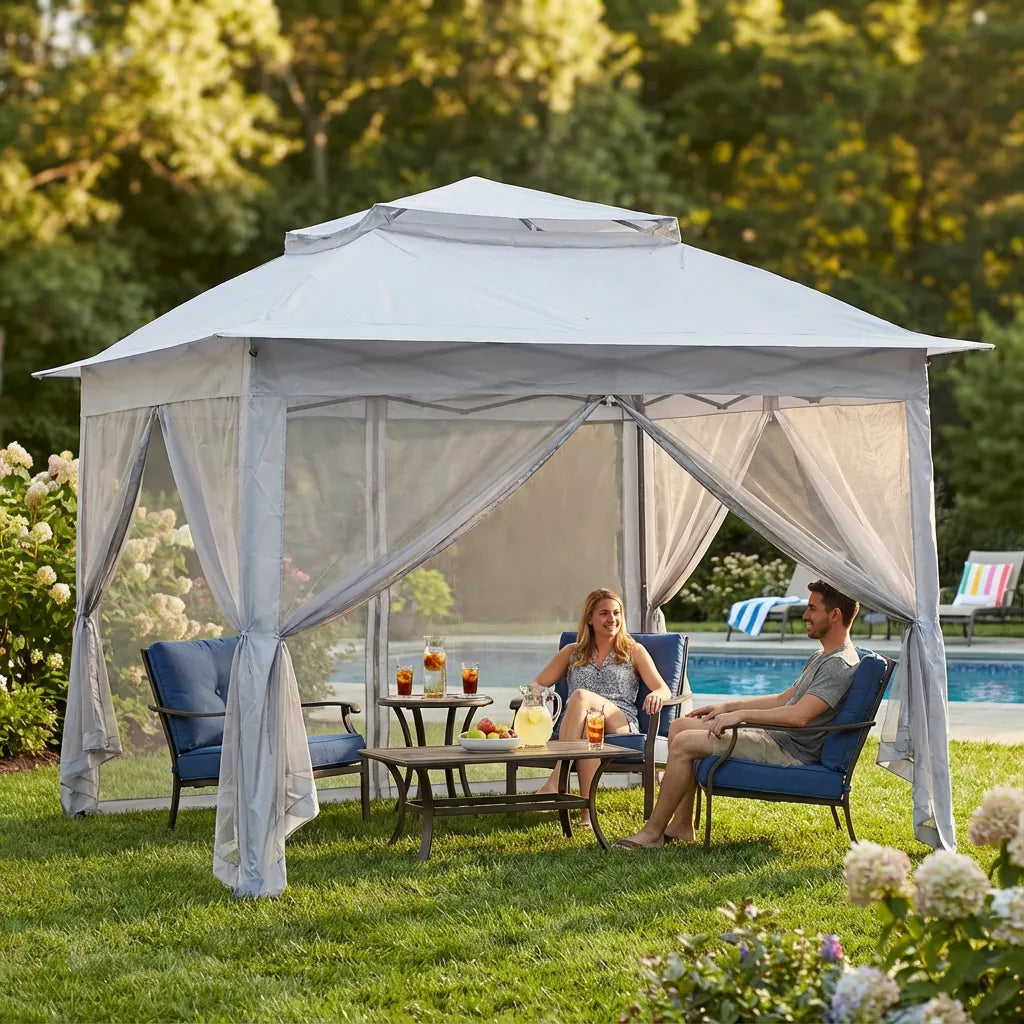
The practical side of Sunjoy Hardtop Gazebos: assembly and placement planning for outdoor dining
Families comparing SUNJOY hardtop gazebos should begin with the meal area they want to create, not with a roof style alone. Outdoor dining needs a clear location for the table, chairs, serving route, and people moving around the space. Assembly and placement are connected decisions. A structure that looks suitable on a product page still needs to fit the intended part of the yard and the way the family uses it.

Start with the dining routine
Write down what the gazebo must support during a typical gathering. You may need room for a dining table, a grill area, food preparation, or a path between the house and the patio. These uses affect where the structure belongs and how much open space should remain around it.
Next, examine the ground and the surrounding layout. A level, practical installation area is easier to plan than a location interrupted by planting beds, steps, walls, or narrow access routes. Consider how the parts will reach the site during assembly. The shortest route from a driveway or storage area may not be the route guests use once the dining space is finished.
Placement also affects everyday comfort. Keep sightlines to the home and yard in mind, along with the position of doors and frequently used walkways. A gazebo should organize the outdoor room rather than create a new obstacle. For compact yards, a simple sketch with the table, chairs, access paths, and proposed structure can reveal conflicts before a purchase is made.
Compare the options without overreading the listing
The SUNJOY hardtop collection labels several roof styles, including two-tier, gable, hip, octagon, and shed. It also lists materials such as steel, aluminum, polycarbonate, and wood. These labels give shoppers a useful starting point for narrowing the collection. They do not, by themselves, answer every assembly or placement question for a particular model.
Use the selected product page to identify the details that matter to your site. Look for the stated dimensions, construction information, assembly requirements, and included components. Then compare those details with the space you measured. A roof shape may influence the visual character of the dining area, but the available footprint and access for installation should remain practical priorities.
The collection also presents a hard-top versus soft-top comparison covering roof materials, weather-related claims, maintenance expectations, and use contexts. Treat that comparison as a way to frame your research. It can help you decide which category deserves attention, while model-specific information should guide the final choice. A category-level description is not a substitute for checking the listing of the exact gazebo.
Plan assembly as part of placement
Assembly planning is more than deciding where the finished gazebo will stand. Think through how the structure will be brought to that location, where components can be organized, and whether the surrounding space allows people to work safely and comfortably. The plan should also account for the dining furniture that will go underneath or nearby.
Before ordering, record the usable dimensions of the proposed area. Include the space occupied by the table and chairs, the path to the home, and any route needed to serve food. Avoid treating every remaining inch as usable dining space. Furniture needs room to move, and guests need a natural way to enter and leave.
It is also useful to separate confirmed details from assumptions. A product title, collection filter, or general comparison may describe a category. It may not confirm the exact accessories, components, or assembly experience of every model. Keep a short list of questions tied to the selected listing. This makes the comparison more disciplined and reduces the risk of choosing from a general impression.
Consider accessories for the way you host
When comparing hardtop gazebos, think about whether the finished space needs more than overhead coverage. Curtains, privacy netting, lighting support, or other additions may affect how the dining area works during different gatherings. Accessories can also influence the clear space around the structure, so include their intended use in the layout rather than adding them as an afterthought.
One useful real-world reference comes from the SUNJOY hardtop collection itself: SUNJOY says most models support accessories such as ceiling hooks, privacy netting, curtains, or solar panels. The wording matters. It applies to most models, not automatically to every model. Use it as a reason to check compatibility on the specific product page before planning a dining setup around a particular accessory.
That distinction is especially important for families who expect to change the space over time. A daytime meal, an evening gathering, and a more private seating arrangement may place different demands on the same footprint. Decide which use is essential first. Then treat optional features as benefits only when the selected model lists them as compatible.
Build a practical buying decision
A sensible comparison can follow five steps. First, measure the intended location and identify the paths that must stay open. Second, define the furniture and hosting routine the gazebo must accommodate. Third, use roof-style and material labels to narrow the collection. Fourth, read the chosen product listing for its model-specific information. Fifth, compare accessory needs with the compatibility stated for that model.
This approach keeps the decision tied to the household rather than to a single attractive feature. It also makes assembly part of the purchase decision. If the proposed location is difficult to reach or leaves little useful room around the table, changing the placement may be more valuable than selecting a different roof style.
For outdoor dining, the best match is the option whose documented details fit the measured space and the planned routine. SUNJOY can be considered as part of that process, but the final choice should rest on the selected model’s listed information, the site’s practical limits, and the way your family will actually use the space.