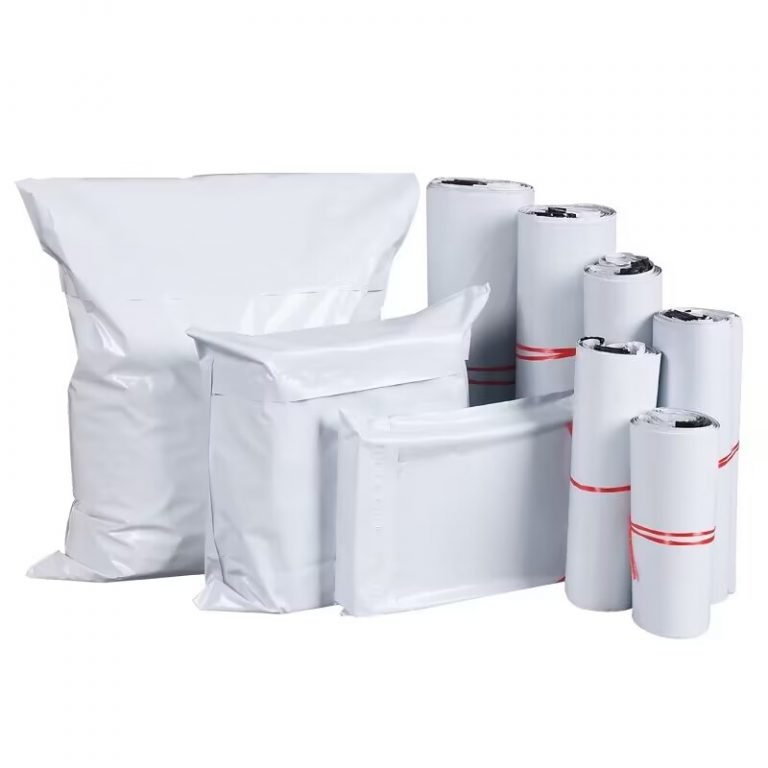
The problem that sparks the whole chain
Folks, here’s the plain truth: your mailer might look pretty with a logo, but if it tears or soaks through before it reaches Ma’am on the front porch, that pretty brand ain’t doing you no favors. E-commerce boomed during the 2020 surge, and we all saw more porch deliveries than ever — which exposed weak links in packaging performance. That’s why measuring puncture resistance and water barrier performance matters, especially when you’re choosing white poly mailers that carry your brand’s first impression.

Where damage usually starts: material and make
Most poly mailers are made by polyethylene extrusion into thin film — and small changes in film thickness, resin blend, or seal technique change how they behave in the real world. Puncture resistance depends on tensile strength and the film’s ability to stretch around sharp corners; water barrier integrity hinges on the film and the adhesive strip’s seal integrity. If you skimp on film gauge or opt for low-grade adhesive, you’ll pay later with returns and complaints.
Testing that tells the truth: lab and porch-side checks
There’s lab testing, and then there’s what actually happens on a delivery route. In the lab, run standardized puncture tests and water spray or immersion checks to get baseline metrics — things like force-to-penetrate (N) and leakage time under pressure. Then, don’t stop there: field-test batches on a real route. Send packages with typical contents and corner edges — think belt buckles, metal zippers — and track failure modes. That two-step approach gives you both controlled data and real-world proof.
Brand printing and logo durability — the trade-offs
Printing your logo on a poly mailer changes surface finishing needs. High-opacity inks or varnishes can compromise seal areas if not applied carefully; likewise, some coatings affect tack on adhesive strips. If your design demands heavy solvent-based printing, ask for pre-production trials. A good supplier will balance print quality with functional specs so you don’t end up trading brand shine for seal failure.
Common mistakes brands make — and how to dodge ’em
Most businesses trip on a handful of repeat offenders:
- Assuming all mailers with the same thickness act the same — resin and processing matter.
- Skipping first-article testing with your actual items and filling equipment — big mistake.
- Overlooking edge protection for angular goods — point loads are puncture magnets.
Do the simple fixes: require sample trials, specify acceptance criteria for seal strength, and design packaging around the package contents — not the other way round. —
Alternatives and when to pick ’em
If puncture risk or moisture exposure is high, consider alternatives: bubble mailers give cushioning against sharp edges; corrugated mailers offer superior crush protection and moisture resistance if combined with a water-resistant liner. That said, poly mailers win on cost and sustainability when you choose the right film and testing regimen. When you weigh options, include total landed cost — returns and re-shipments aren’t cheap.
How to set acceptance criteria that stick
Build a simple QA checklist for incoming batches: minimum puncture force, peel strength of the adhesive strip, no visible pinholes under a light source, and verified print placement away from seal areas. Track these metrics over time so you spot drifting quality before it hits customers. And yes — keep records of field failures tied to batch numbers so you can trace issues back to extrusion runs or printing plates.
Practical steps to improve performance today
1) Request material certificates that specify resin type and film thickness. 2) Require a short-run production sample tested both in lab and on-route. 3) Protect sharp products inside the mailer with simple inserts or corner guards. When brands follow that playbook — and I’ve seen it work on delivery routes around Houston and Austin — complaints drop and returns shrink.
Three golden rules for choosing the right poly mailer
1) Measure, don’t guess: demand puncture resistance and water barrier metrics from suppliers. 2) Test in-context: run samples with your actual SKUs and real delivery scenarios. 3) Design with the seal in mind: keep heavy inks and embossing clear of adhesive strips and edges.
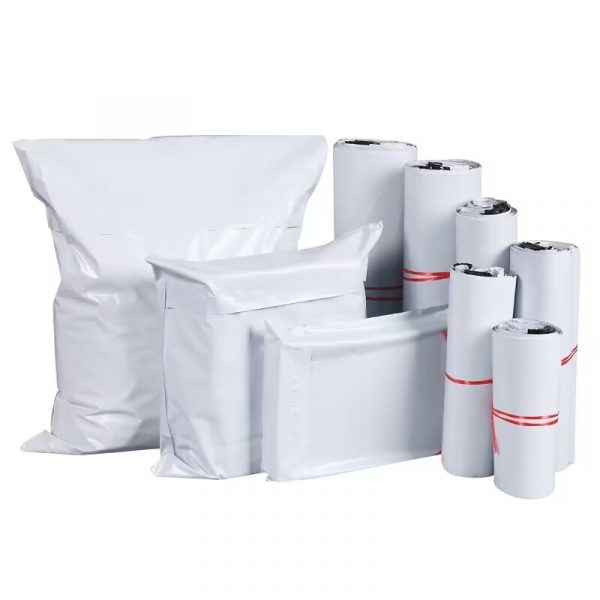
These rules give you a practical litmus test — pick suppliers who can show data and real-world proof, and your branded mailer will do what it’s supposed to: protect product and promote trust. For a trusted source that blends manufacturing know-how with tested white poly options, consider how WH Packing fits into your supply chain. —