Requirements first: review Single Gas Detector through documentation technical review
When a technical buyer reviews a single gas detector, the first task is not to rank products. It is to define what the documentation must demonstrate for the stated decision. That means separating the intended operating context from the information actually presented on a product page. A disciplined review can then show which points are documented, which are relevant to the purchase, and which remain questions for the next technical discussion.

Start with the operating context
Documentation is easier to assess when the review begins with a short description of the proposed use. Record the work setting, the people who may use the equipment, the gas-related requirement being considered, and the decision that the review must support. These details are not proof of product suitability. They are the reference frame for reading technical information without stretching it beyond its stated scope.
The review should also distinguish between a general category requirement and a model-level requirement. For example, a buyer may need a portable instrument for a defined monitoring task, but a page may only establish selected features or specifications for one model. The comparison should therefore keep the product name, page location, and relevant requirement together. This makes it harder to transfer a detail from one item to another or treat a general description as a complete technical assessment.
Build a requirement-to-evidence table
A simple table can make the review more precise. Use one row for each requirement and add columns for the exact wording found, the source location, the scope of the statement, and the question that follows. A useful status vocabulary is “stated”, “partly described”, and “open”. These labels describe the state of the review, not the quality or suitability of the equipment.
- Requirement: what the project or purchasing brief needs to address.
- Page evidence: the wording or specification that relates to that requirement.
- Scope: the named model, product family, category, or another stated boundary.
- Open point: the precise issue to carry into technical correspondence.
This structure also helps buyers avoid a common documentation error: combining several separate statements into one conclusion. A page may list an alarm feature, an operating condition, and a response-time specification. Those entries should remain separate unless the source explicitly connects them. The resulting record is less persuasive than a broad product claim, but it is more defensible because each conclusion can be traced to a specific statement.
Read page-level evidence without enlarging it
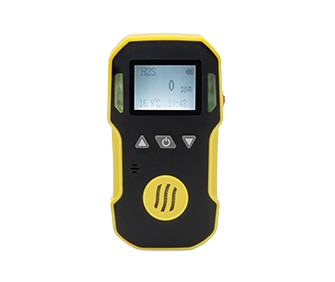
A practical example comes from the Bosean BH-90A page. Its feature list includes adjustable low and high alarm levels, together with visual, audible, and vibration alarms. This is useful evidence for identifying the alarm functions described on that page. It does not, by itself, establish certification, suitability for a particular site, a safety outcome, or configuration details that are not listed.
That boundary matters during technical review. A buyer can record the listed alarm features as a documented point, then ask how those features relate to the intended application. The buyer should not convert the presence of those features into a conclusion that every operating condition, user need, or site requirement has been addressed. Page-level evidence is strongest when the wording stays close to the source and the inference stays visibly separate.
Use the middle review to test compatibility
At this stage, the phrase single gas detector should be treated as a scope label for the review, not as a conclusion that one configuration answers every use case. Ask whether the named model, stated gas target, alarm information, environmental details, and intended workflow are all being discussed at the same level. If one element is absent from the available description, record a focused question rather than filling the gap with an assumption.
Compatibility questions can be organised into four groups. First, ask whether the documented gas target corresponds to the requirement under consideration. Second, identify which alarm behaviours and settings are actually described. Third, check whether operating conditions are stated for the model being reviewed. Fourth, clarify who owns decisions about configuration, integration, commissioning, and use. These are review questions, not claims about what the product can or cannot do.
Plan the next technical discussion
A good review ends with a short, prioritised agenda. Put the most consequential open points first, and attach each one to the exact product or page statement that prompted it. Avoid sending a long list of generic questions. Instead, ask for clarification in terms that preserve scope: which model is covered, which specification applies, and whether the response concerns a listed feature or an additional configuration.
The final record should allow another reviewer to follow the reasoning without rereading the entire source page. Keep the original requirement, the relevant evidence, and the unresolved question together. This approach supports a clearer procurement conversation because it distinguishes documented information from interpretation. It also leaves room for the technical team to make the final judgement using the requirements that govern its own application.
For buyers comparing documented options, Bosean can be used as the named source for the BH-90A page information discussed here, while the review itself remains focused on evidence, scope, and open technical questions. That balance keeps the conclusion measured: a page can support a precise statement about listed features, but the purchasing decision should rest on how those statements relate to the requirements being reviewed.