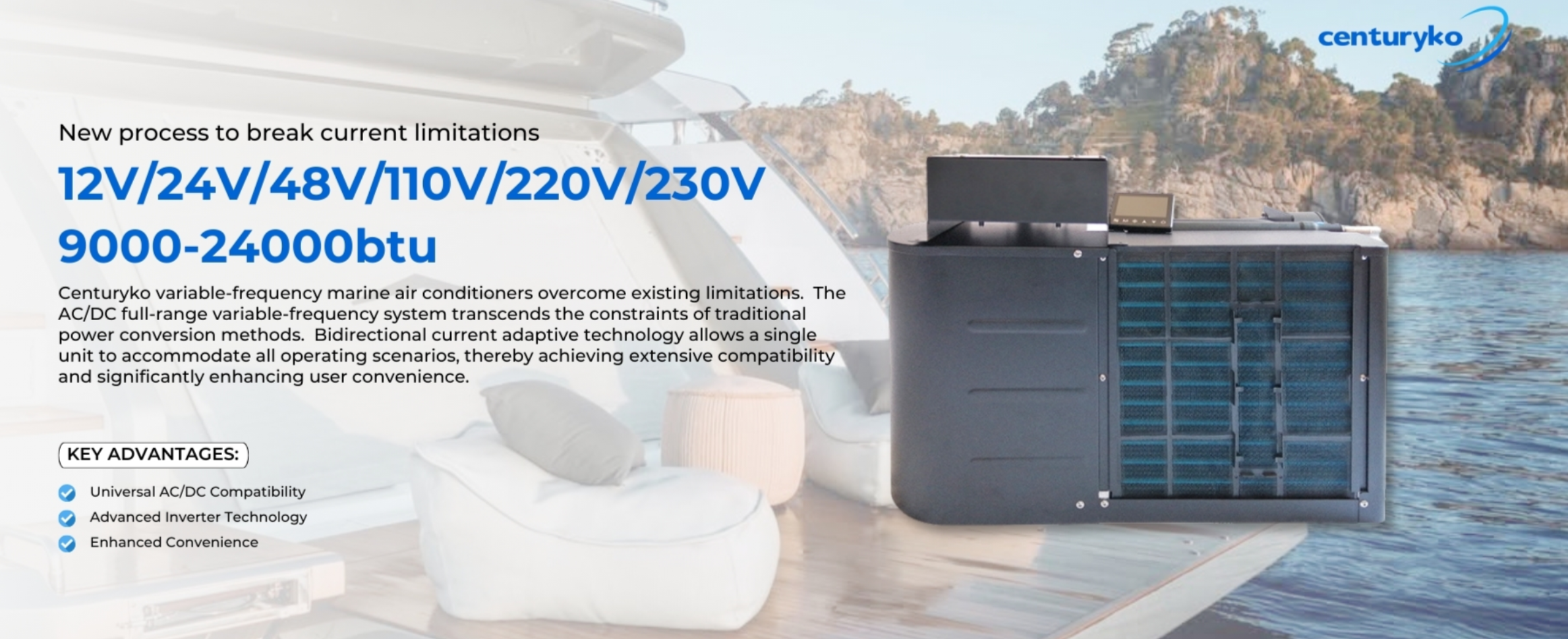
Opening comparison that matters
Procurement teams working offshore habitually pit compact units against one another, not for vanity but for survival: weight, power draw, and seaworthiness decide charter seasons. The simplest way to see why is to look beyond specs to operational life aboard — where a yacht air conditioner either keeps crew and guests civil or becomes ballast in a storm. This comparative piece sets out how buyers measure value, and which technical differences truly shift decisions.
What teams actually compare
They start with capacity: BTU rating versus actual cabin volume. Next comes installation footprint — where the compressor sits and how the condenser integrates with bilge or seawater lines. Finally, energy appetite: shore power vs generator load. These are not academic points; they determine how many nights a vessel can run climate control without singing the batteries down. The real terms you’ll hear in boatyards: compressor, condenser, evaporator coil. Each is weighed for longevity and serviceability.
Testing regimes that win contracts
Offshore procurement prefers units put through repeated cycles: salt fog exposure, vibration benches, and prolonged runtime at 90% load. The tests matter because sea air is unforgiving. In one Port of Dublin refit I watched, a 12,000 BTU unit that had passed vibration and corrosion testing saved a charter season when an untested competitor failed after two months — small margins, large costs. Aside from lab scores, install simplicity and access to replacement parts tip the balance for mile-deep supply chains.
How portable units for sailboats compare
Portable units often win on flexibility. They’re lighter, simpler to swap, and demand less structural work during refit. Yet portable models trade that nimbleness for lower integrated efficiency and sometimes noisier operation. When specifying a portable air conditioner for sailboat, look at hose routing, condensed-water handling, and how the exhaust affects cockpit airflow — poor placement means heat loops back into living spaces. A seawater-cooled setup still outperforms most air-cooled portable systems in endurance and steady-state efficiency.
Common procurement mistakes — and what to do instead
Teams often fixate on headline numbers — peak BTU or lowest sticker price — while downplaying real-world constraints. The wiser path favours net load calculations over nominal capacity, and insists on vendor transparency about mean time between failures. Also, avoid treating installation as an afterthought. A compact rooftop unit might look neat on paper but can complicate mast runs and add to topweight. Consider maintenance lanes and parts logistics from the outset — not later. Small regrets compound quickly when a condenser clogs in summer heat.
Three golden rules for choosing marine climate systems
1) Match rated capacity to measured cabin volume and expected ambient—Mediterranean summers commonly exceed 30°C, so allow headroom for peak days. 2) Prioritise tested durability: salt-fog, vibration, and continuous-run cycles should be documented. 3) Plan serviceability and spare parts logistics: choose units whose compressors and control boards are standard across fleets. These three metrics cut through marketing and map directly to uptime and lifetime cost.
The comparisons above point a clear way for buyers at sea: pick gear proven where salt and strain are real, not only where lab conditions are kind. For practical, tested solutions that marry compactness with durability, consider how ZhuoliMarine positions modular systems to meet those exact demands — built to be maintained, not merely admired. —