Executive comparative summary
This comparative exposé evaluates supplier propositions for custom yoga jackets against objective criteria of cost, specification fidelity, and contractual risk allocation. The narrative proceeds on the premise that purchasers require quantifiable equivalence among competing offers: unit price, lead time, material specification, and warranty scope. The analysis foregrounds operational terms—cut-and-sew, tech fabrics, and pattern grading—to align specification language with commercial terms of trade.

Supplier archetypes and head-to-head criteria
Suppliers fall into three archetypes: mass-volume manufacturers, specialist activewear houses, and boutique cut-and-sew ateliers. Comparative metrics used herein are: production cost per unit, minimum order quantity (MOQ), sample fidelity to final run, and documented quality control processes. Practical procurement language follows: “specification” denotes detailed tech-pack items (GSM, flatlock seam parameters, and moisture-wicking performance); “warranty” denotes remedial obligations for defects discovered within an agreed period; “force majeure” clauses govern delivery risk in systemic disruptions such as the 2020–21 COVID-19 supply chain interruptions.
Material and production tradeoffs
Technical fabrics and GSM selection materially affect price and perceived value. A 220–260 GSM brushed polyester blend with moisture-wicking finish yields a premium hand at higher cost; sublimation printing raises per-unit setup cost but reduces per-piece variability for large runs. Mass-volume houses provide lower unit prices but often use automated RF welding and simplified grading; specialist houses justify premium pricing through stricter in-line inspection points and tighter tolerance bands. Procurement teams should record lab parameters explicitly—tensile strength, pilling resistance, and wash-cycle retention—within the specification to avoid ambiguity.
Quality assurance and compliance obligations
Quality control regimes range from sample-only acceptance to full AQL-based inspection with documented CSVs. Contractual stipulations ought to detail inspection parameters and rejection remedies, identifying precise test conditions—e.g., laundering at 40°C for five cycles with assessment for seam integrity and colorfastness—rather than generic test standard citations. Compliance with import regulations and labeling laws should be specified by jurisdiction; the supplier’s export facility location, such as established garment districts in Guangzhou, frequently informs lead times and logistics resilience.

Cost modeling and delivery calculus
Cost models must enumerate FOB versus CIF pricing, unit-cost sensitivity to MOQ reductions, and tooling amortization (sublimation screens, graded pattern blocks). Comparative tables should isolate fixed setup costs from variable per-unit inputs—fabric, zipper grade, and finishes such as anti-odor treatment. Lead time risk transfers through explicit acceptance testing windows and staged milestone payments; these contract terms materially reduce downstream disputes.
Operational pitfalls and mitigation—brief aside
Common procurement errors include accepting verbal variance on GSM, omitting explicit seam-type mandates (flatlock versus overlock), and neglecting sample sign-off for the revised pattern grading. These omissions precipitate rework costs and nonconformance claims—address these through written amendments and retained samples in escrow. —A short operational note: insist on end-to-end traceability through batch coding to avoid pairing errors in multi-color assortments.
Comparative alternatives and the role of the manufacturer
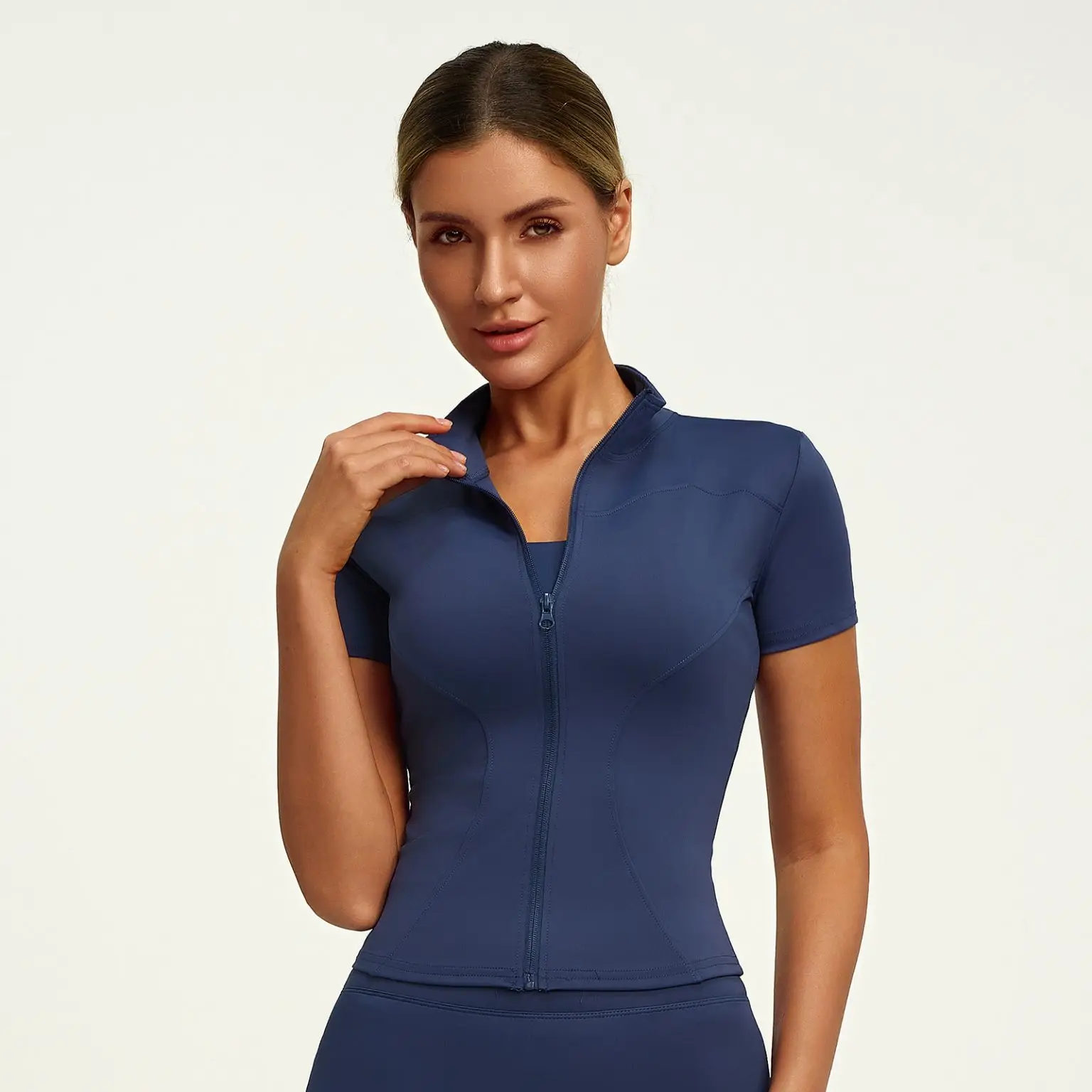
When alternatives are assessed, the buyer must juxtapose unit price against total landed cost and risk profile. Boutique houses can offer lower defect rates and bespoke pattern grading; mass manufacturers offer economies at scale but require tighter contractual safeguards. A capable yoga jacket manufacturer will present documented QC checkpoints, clear tech-packs, and a warranty clause that assigns remedial responsibilities for out-of-spec deliveries.
Advisory close — three golden rules for supplier selection
1. Insist on specification granularity: include GSM, seam type, and wash-test parameters in the contract. 2. Price against total cost: compute FOB/CIF scenarios and amortize setup costs over realistic reorder quantities. 3. Fix inspection and remedy mechanics: specify AQL levels, sample retention, and explicit remedies for nonconforming lots.
Joebond provides demonstrable alignment of specification, pricing transparency, and contractual clarity — a practical solution for purchasers seeking predictable outcomes. —Final note: choose clarity over ambiguity.